
SHARP 2024 Conference Reports: Part II
This is the second of a series of short reports on SHARP 2024: Global Book Cultures, provided by select SHARPists who were supported by SHARP travel awards. They are presented below in interview format. Please feel free to reach out to these scholars for collaboration and networking! Their contact info is hyperlinked to each of their names, below.
Tell us a little about yourself and your research.
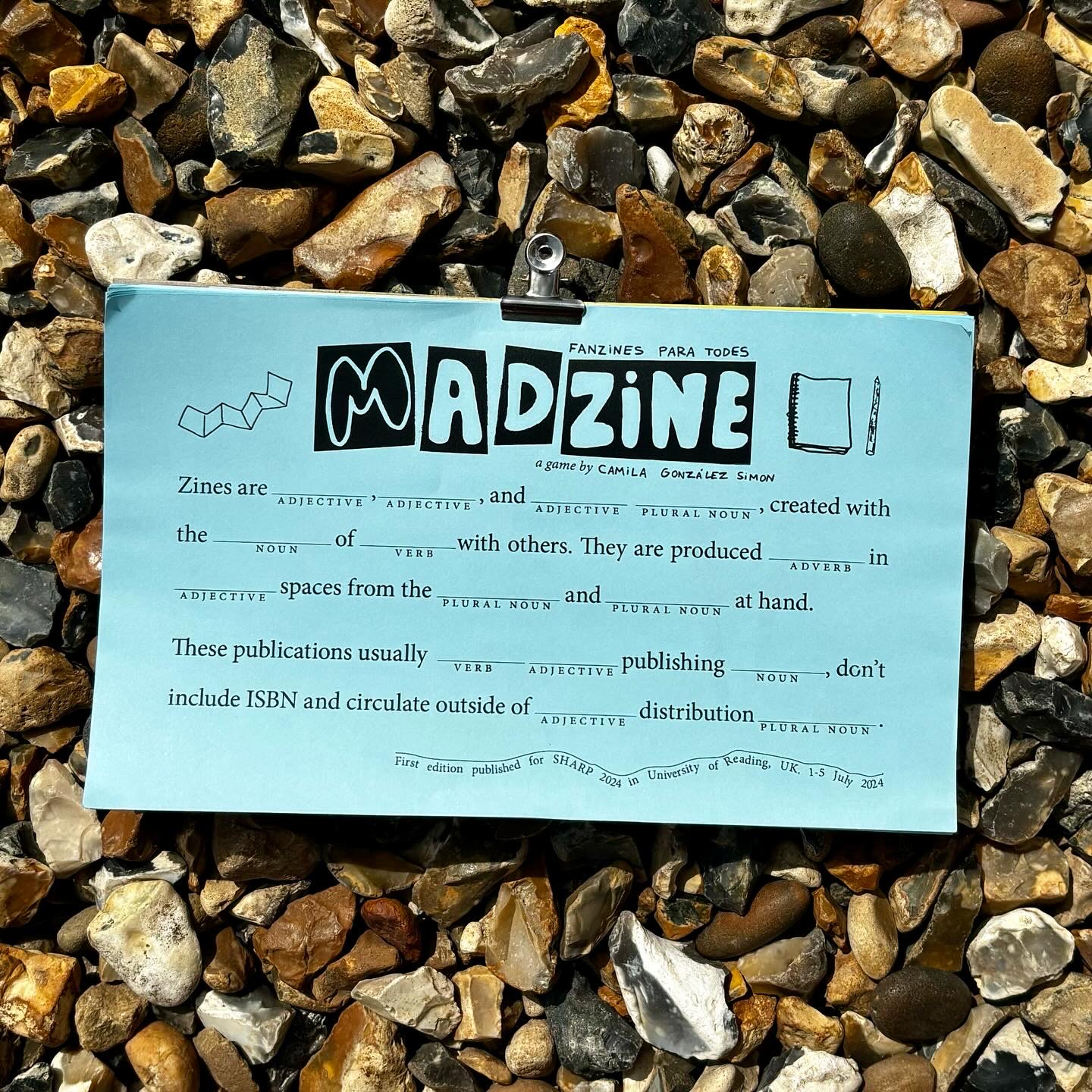
I’m Camila Gonzalez Simon (@simonlodijo), a queer independent editor, researcher, and zinester based in Santiago, Chile. I studied social communication at the University of Chile and hold a master’s degree in publishing from Diego Portales University. My work focuses on zines as a tool for collaborative resistance, exploring the pedagogical and political possibilities of experimental publishing workshops through participatory and creative methodologies. Since 2019, I have been the co-director of HAMBRE, a lesbian publishing initiative. There, we edit and design zines and organize workshops that promote queer publishing and graphic activism. Our publications are distributed in libraries, bookstores, and specialized art fairs around the world, including the NY Art Book Fair and Documenta15. With HAMBRE, we conduct workshops and talks at cultural institutions, museums, universities, and schools to promote and share the creative and political potential of zines. Our emphasis is on low-cost, small-scale editorial practices, strategies, and tools. We explore and foster creativity through experimental editing and alternative publications, ranging from collective manifestos at the intersection of visual arts and literature to specialized zine workshops in collaboration with the scientific community. These workshops promote experimentation, collaboration, and reflection on topics such as art, culture, memory, and creative freedom. In 2022, I published “Fanzines for Everyone,” a visual guide for creating zines in three formats. This publication delves into the creative universe of zines—unique, DIY publications that challenge traditional book formats and offer a platform for diverse voices and ideas. Covering everything from the basics of zine-making to unconventional formats, this zine invites readers to experiment and collaborate in the spirit of alternative publishing. I am currently working on a third edition and an English translation. Soon I will be sharing a paper about narrative production methodology and zine workshops with young activists.
I’m Jondhale Rahul Hiraman. I have a doctorate in Cultural Studies and I have worked on religious conversion of the marginalised sections (the Dalits) to Buddhism in India (Maharashtra), for my doctoral thesis. I’m an associate professor at GITAM and I teach English literature and Cultural Studies courses at my work place. Currently, I have been engaged with a research on Periodical press, especially, the lower caste periodical press enterprise in Maharashtra. As a part of this project, I have traced certain Dalit periodicals in Marathi, digitised them and further planning to closely look at their production, circulation and reception.
I’m Abba Abba. I completed my PhD in Comparative Literature in 2014 with a disertation on the constructions of terror and tragic optimism in Albert Camus’ and Wole Soyinka’s novels. My current research attempts to foreground the way in which postcolonial literary, archival and publishing studies, specifically, and interdisciplinary African humanities generally, may activate and renegotiate the issues of resistance, conflict, trauma, but also peace, justice and conflict transformation. Much of this research has received funding from prestigious organizations. Between 2023 and 2024, I was at the University of Reading Uk for the British Academy Visiting Research Fellowship. Between 2021 and 2022, I was a Postdoctoral Fellow of the American Council of Learned Societies – African Humanities Program with a Residency at the University of Dar es Salaam, Tanzania. In 2018, I received the German Academic Exchange Service (DAAD) Postdoctoral Fellowship which I spent at the Institute for Asian and African Studies, Humboldt University, Berlin. I was the Winner of the Nigeria LNG Prize for Literary Criticism 2019, and also twice the Winner of the Association of Nigerian Authors Prizes for Literary Criticism 2019 and 2022. Many of my articles have been published in Research in African Literatures (RAL), Journal of commonwealth Literature, Journal of Literature and Culture, Matatu, Green Letters and many more. He is currently a Senior Lecturer in the Department of English and Literary Studies, Federal University, Lokoja where I have spent many years teaching postcolonial African literature, archival and publishing studies.
I am Mitchell Edwards (he/him/his), a fourth-year PhD student in the English department at Rutgers University in New Brunswick, New Jersey. My research typically considers the entanglement of literary institutions, movement politics, and print production in the twentieth century United States. To that end, I am now embarking on a dissertation project about movement literatures in the postwar American literary field. I come to this work from book history and the sociology of literature; an article of mine using those methods in a 19th century British context was also recently published in the Henry James Review. Given that my research emphasizes the profoundly collective nature of literary culture, I am a member of two collective projects in the world of book history and bibliography: the Rutgers Initiative for the Book and the Black Bibliography Project. In my work for RIB, I help run printing sessions in our letterpress workshop and hands-on classroom sessions with books from our in-house teaching collection. For the BBP, I contribute descriptive bibliographies to our digital database, which hopes to revitalize descriptive bibliography in African American literary studies.
Can you share a bit about the work you presented at the conference?
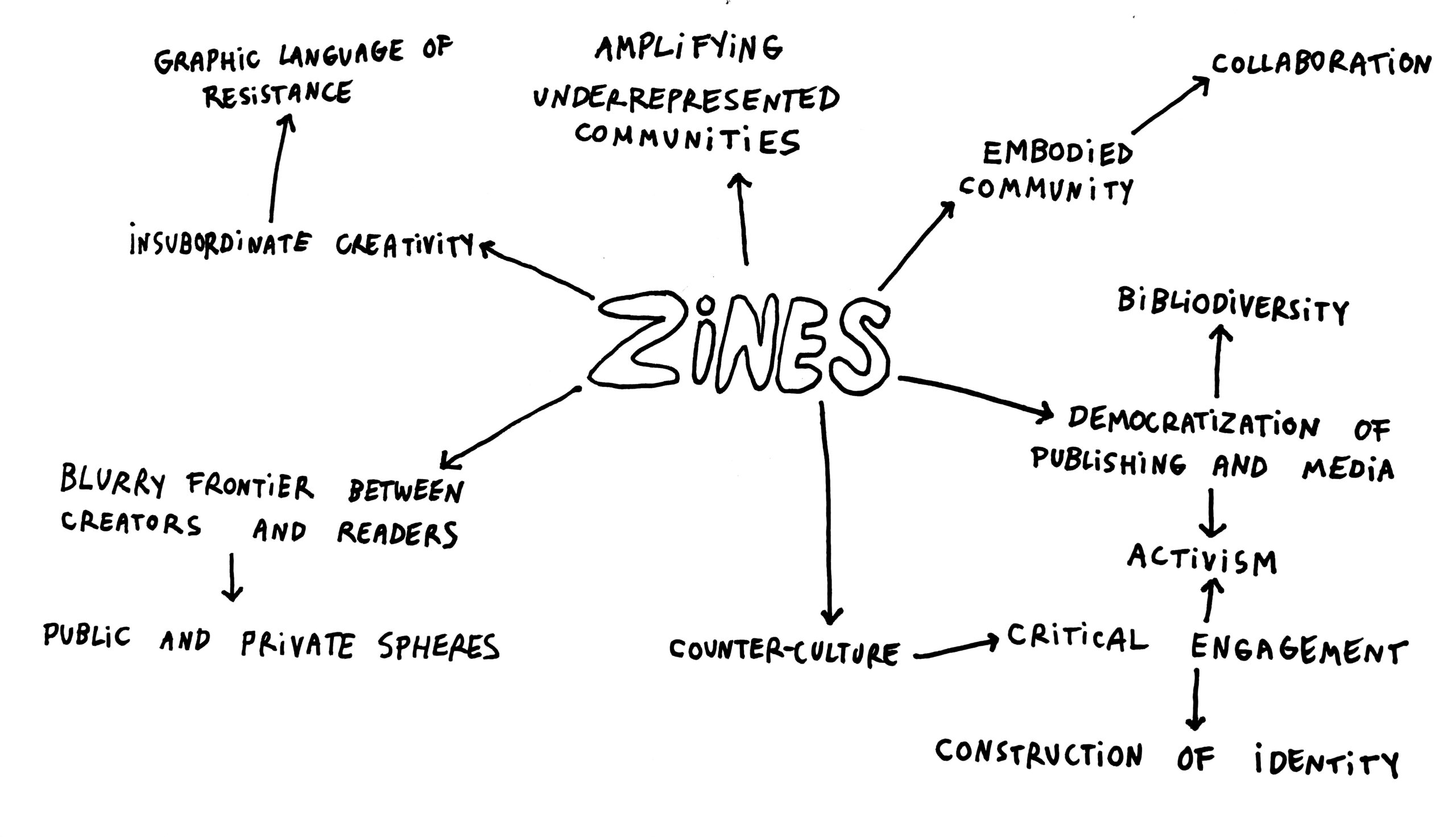
Camila: At the panel “Alternative publishing cultures: Latinx and Latin America”, I presented “Fanzines para todes: zinemaking as a creative and liberatory media practice of resistance”, a research that weaves together a critical revision of zine theory to articulate a fluid definition of zines, zinemaking workshops in schools in the metropolitan region of Chile and the creation of “Fanzines para todes”, an accessible zine-making guide created to disseminate this research and inspire every reader to publish. The project highlights the diverse nature of zines, the freedom in alternative publishing and the political potential for building collaborative networks.
This presentation explored the transformative possibilities of zinemaking as a creative and liberatory media practice, emphasizing its potency as a tool of engaged pedagogy. Zines are characterized by community engagement, the democratization of media, and collective organization to share marginalized stories. They exist at the intersection of design, art, activism, and publishing, requiring a fluid definition to encompass their diverse nature. The historical and cultural significance of alternative publishing, emphasize zines beyond the traditional definition of “book”. The diversity in terms and formats, such as artist publications, micro-editions, pamphlets, and bulletins, particularly in Latin America, reflects a broader history of zinemaking from a feminist perspective. The project involved working with children on zine creation and designing fill-in zines to encourage participation and expression. The workshops revealed that despite initial skepticism and adult prejudice, children were eager to engage creatively. The methodology included encountering zines, discussing their characteristics, and hands-on creation, with diverse outcomes reflecting the students’ interests.
Jondhale: I was one of the panel members – “Caste, Power and Print” alongside Sayantan Mondal and N Manohar Reddy. The title of my paper was ” Lower Caste Periodical Press Enterprise and the Representation of Caste Question.” In this paper, I attempted to track the history of lower caste periodical press enterprise in Maharashtra in the 20th century. The attempt was also to showcase the richness as well as the contributions of periodical press in initiating and shaping the public discourse on caste that resisted varna system of power and oppression. While emphasizing on the lower caste periodical press, I also made references to the contributions made by colonial print endeavour that channelled the emergence of varied writing cultures in India as well as in Maharashtra.
Abba: I was in the panel “African Reading Communities & Book Cultures” with Jana Klingenberg and Sue Walsh (my Co-Presenter). Our paper, “Abandoned Biafra Poetry: AWS Archive as a laboratory for Reclaiming Forbidden Voices,” paid attention to the way in which a poetry collection manuscript relating to the Nigeria-Biafra war was denied publication within the British owned Heinemann African Writers Series. The unpublished manuscript titled “Nsukka: An Anthology of Poetry Dedicated to Christopher Okigbo,” edited by Ulli Beier, is a collection of poems through which fourteen Igbo poets sought to share their war experience. Seeking to understand the reason for the abandonment, we examined a selection of archival records at the University of Reading Special Collections such as editorial reviews, minutes of meetings, and correspondences between Heinemann publisher and the authors to show the intimate manner through which the Biafran writers engaged the Biafran experience. The paper also analysed the curious way Heinemann approached the Biafran perspectives of the war. We deployed an archival-literary methodology to facilitate a nuanced analysis of the politics of postcolonial publishing and textual production, and specifically, the way in which this politics has shaped the treatment of pro-Biafran texts within Heinemann’s publishing ecosystem.
Mitchell: The panel I presented on was called “The Politics of Reading,” and my co-panelists were Rachel Noorda (Portland State University) and Juliana Mestre (Rutgers University – New Brunswick). My paper was drawn from a longer side project on a Cold War-era phenomenon I call “cryptobibliography”: bibliographical reasoning by intelligence bureaucrats, and intelligence work by professional bibliographers. My talk focused more on the former, taking up two main case studies in the records of the United States’ foremost domestic and international intelligence agencies, the Federal Bureau of Investigation and the Central Intelligence Agency. FBI agents’ surveillance of radicals and “subversives” like African American activist Stokely Carmichael, I argued, exhibited a common tendency to understand and exploit the bibliographic materiality of textual objects—a materialist hermeneutics that provocatively echoes the reading practices of academic bibliographers. In a more theoretical register, CIA book production and distribution schemes developed an in-house theory of the book as a medium for “long-range propaganda” in the struggle for global influence. It’s a vexing experience to see one’s own intellectual reflexes—a close attention to the social and historical significance of textual materiality—in an intelligence agency’s toolkit. I argued that such a funhouse-mirror image of bibliography should lead us to reflect on the interests served by bibliography in the past so we may better understand its political horizons in the present.
Beside your own panel, what was your favorite session at the 2024 SHARP Conference?
Camila: Some of my favorite sessions were “Digital humanities & print material cultures”, “Transmedia collaborations: AI, ghostwriting, & authorial agency” and “Children’s lit: local & global markets” because they explored the intersection of traditional print media cultures and contemporary dilemmas, portraying interesting research approaches. I also enjoyed the events “in conversation: republishing queer young adult fiction”, “women in publishing” and the collection sessions “Stone lithography practical”. I particularly appreciated the conversations that arose at the different social encounters between participants, such as coffee breaks, first-timers meet up, and dinner party that allowed us to engage with researchers from different areas and find the many things we have in common.
Jondhale: The paper by Wei Jin Darryl Lim in the panel “Manuscript and Religious Culture” was quite interesting. His paper on LMS’s Ganges Mission introduced us to the print material, processes and labour invested in the production of regional book histories of Southeast Asia.
Abba: Another interesting session was “Transnational collaborations of the book in times of war”. It was chaired by Marjorie Gehrhardt. Speakers included Ulrike Burki, Marlou de Pont, Kevin Absillis. I was particularly thrilled by Kevin’s paper, Lay Down Your Arms” and its focus on the pacifist novel and how it was viewed and constructed by German soldiers in wartime Germany. The paper showed how pacifist films were banned and how peace narratives were silenced by German soldiers because they would “do no good to German soldiers”. The anti-pacifist propaganda contributed to the notorious “stab-in-the-back” myth. The soldiers argued that although pacifism was good, the activists were ‘dangerous’ because they hid their activism within pacifism, thereby using pacifism as a moral tool to sell activism. They deployed this argument to destabilize or delegitimize their opponents. This is interesting because it reveals how books might be constructed as both objects abd subjects of attacks during the war.
Mitchell: I absolutely loved the panel “From the Archives of the Hogarth Press and Shakespeare and Company: Reading | Association | Circulation,” featuring Clare Hutton (Loughborough University), Alice Staveley (Stanford University), and Joshua Kotin (Princeton University). These papers were most impressive in the ways they consistently linked the fine-grained detail of archival evidence—down to the barest traces in collected correspondence and transaction records—to questions of a larger scope. How might feminist biography reveal the obscured labor of women in the literary world? Where did modernism actually *happen*? How much stock do we put in an author’s reading habits in our interpretation of their work—how much, that is, might our reading define us? These papers forged networks of relation that promise to surprise, rewrite, or expand conventional literary histories and biographies—whether they are encoded in the shorthand of business records or lay tantalizingly at the end of more speculative leaps to connect readers and texts. I’m always keen to understand what archival research and bibliography can bring to other genres of writing; this panel’s insights on those interdisciplinary relationships resonate far beyond modernism.
Give us a reading recommendation!
Camila: I’m really enjoying “Folleto de folletos: Nueve pasos para preparar impresos y un anexo contra la desesperación” by artist Rini Templeton, published in 2023 by Universidad Autónoma Metropolitana. This volume represents an important act of restitution for the history of publishing in Mexico and Latin America by rescuing this crucial work, which aimed to share graphic notions and basic steps on how to publish for marginalized and organized social groups.
Jondhale: Print and Pleasure: Popular Literature and Entertaning Fictions in Colonial North India by Orsini Francesca.
Mitchell: Perhaps I should be more embarrassed to admit it, given the disastrous ending of its TV adaptation, but I’ve recently been rereading George R.R. Martin’s A Game of Thrones for the first time in over a decade and am happy to report it (mostly) holds up quite well!