
SHARP 2025 Rochester Conference Reports: Part I

We are thrilled to share with you a number of short reports on the SHARP 2025 conference that took place in Rochester, NY July 7-10. Read below to learn more about this years’ travel awardees and their work.
Tell us about yourself and your work!
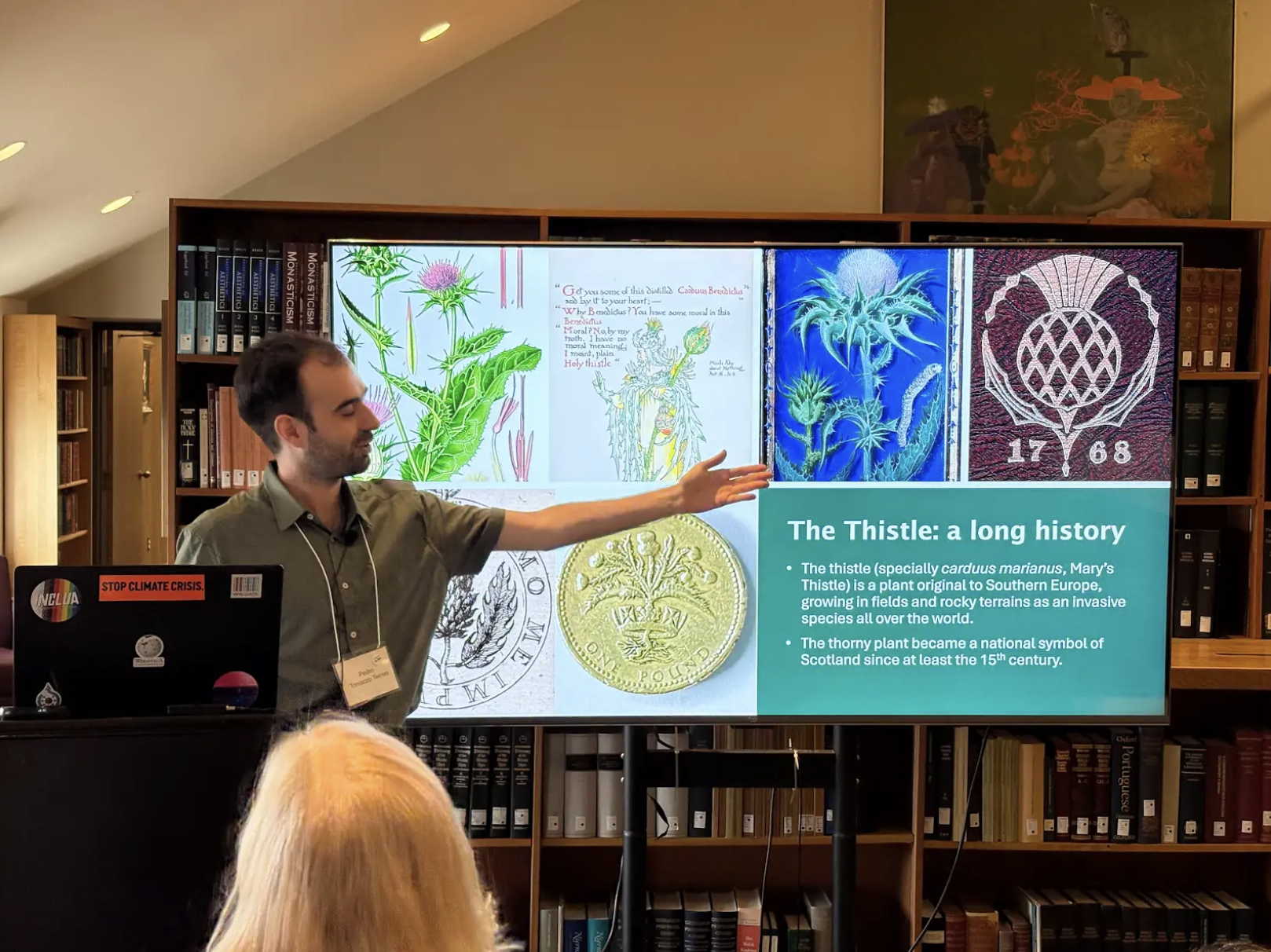
My name is Pedro Toniazzo Terres (he/him), and I am based at the University of Campinas (UNICAMP) in Brazil. I study the history of encyclopedias in mid-20th-century Brazil, from state-led and modernist-inspired ones inside the “National Institute of the Book” to the arrival of foreign publishing companies in the 1960’s such as Larousse and Encyclopaedia Britannica.
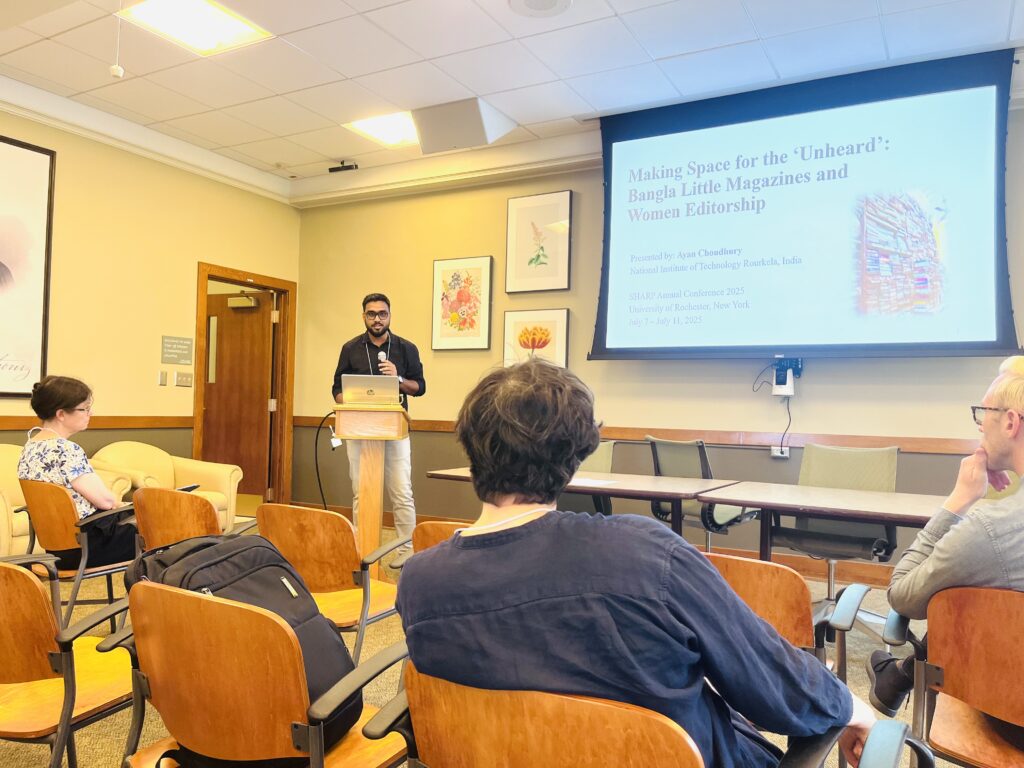
I’m Ayan Choudhury (he/his), a PhD scholar in the department of Humanities and Social Sciences at the National Institute of Technology (NIT) Rourkela, India. My research interest includes magazine studies, book history, cultural studies, and women’s writing and editorship. My doctoral project focuses on literary movements in post-partition Bangla little magazines.
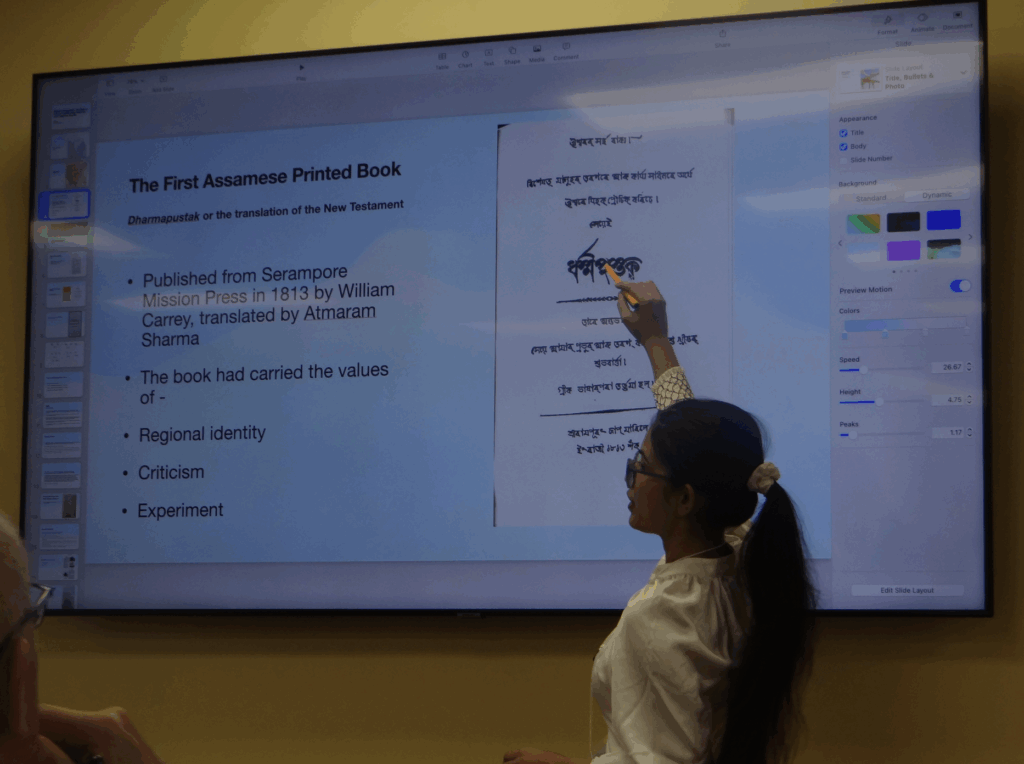
My name is Simi Nath (she/her). I’m a Ph.D. scholar under the supervision of Dr. Gautam Chakravarty in the Department of English, University of Delhi, India. My research area is Book History and Print Culture of the mid 19th Century Assam – a northeastern state in India. In my research I look at the transition from manuscript tradition to print culture in Assam. I study the history of the written word, evolution of script, purity of knowledge associated with manuscripts and explore the shift in orthography, reading practices and the question of modernity after the advent of print. I look at the periodicals and religious literature and explore the multiple aspects of their creation, transmission and reception in the early years of the existence of print. The study seeks to establish the dynamics of correlation between the cultural history of the printed books and the impact of the print on the socio-cultural milieu of that period.
My name is Jiřina Šmejkalová (she/her) and I am at Charles University, Prague, Czech Republik. My teaching and research span contemporary and historical aspects of publishing, book sales and readership. Beyond monographs (Cold War Books in the ‘Other’ Europe, 2011, Kniha, 2001), I have published in academic journals and edited volumes, serve on the editorial board of Book History, and curated expert events at the Prague and London Book Fairs. Before joining the Institute of Information Studies and Librarianship at Charles University, I held academic posts in the USA and Europe, including the UK (Durham, Lincoln) where I became Reader in Media and Cultural Studies. With Prof Ann Gray, I co-lead the Research Centre for European Cultural Studies (University of Lincoln) and served as PI and co- investigator on projects funded by the British Academy, COST Action, and the Czech Science Foundation. I am among the pioneering academics and activists who initiated post-Cold War feminist and gender scholarship in East European and Czech intellectual contexts.
Can you share a bit on the work you presented at the conference?
Pedro: My paper for the “Censorship, Authoritarianism, and the State” panel examined Enciclopédia Barsa during Brazil’s military dictatorship and its ties to 1960s U.S. policy. While colleagues focused on Soviet book cultures, I analyzed a U.S.-funded project (USAID/Britannica) directed by William Benton — Democratic Senator and UNESCO ambassador. Benton framed Barsa as democratizing knowledge, but its production became contested. I trace how Brazilian contributors (editors, writers like Antônio Callado, salespeople) navigated censorship. The sources reveal Barsa as a battleground: Britannica promoted it as a vehicle of liberal modernity even as its Brazilian collaborators faced persecution.
Ayan: I have presented my paper entitled “Making Space for the ‘Unheard’: Bangla Little Magazines and Women Editorship” in the panel “Marginalized Readers and Writers.” In this paper, I have shown how Bengali women editors revisited the history of nationalist movement of India in their little magazines, and recorded ‘unacknowledged’ contributions of ordinary women which were usually overlooked or sidelined in the disciplinary history. The discussion after the presentation from other scholars present over there added important insights to my work.
Simi: I presented in the panel named “Regional Print Production”. The speakers were David Carter, Alexandra Dane – both of whom spoke about print in Australia, and myself. I presented my paper on the role of the printing press established by the American Baptist Missionaries in Assam, in shaping a distinct regional and linguistic identity of the Assamese community. Evangelism in Assam had begun with the New Testament translated in Assamese as Dharmapustak” – a project carried out by Dr. William Carey published in 1813 from Serampore Mission Press in Calcutta. I talked about the threefold values embedded in the Dharmapustak – the values of regional identity in terms of language, as Carey made special efforts to translate the New Testament in grammatically correct Assamese and in a script prevalent in the manuscripts of the region, therefore familiar to the locals; along with the values of criticism and experiment – as the text also introduces the print language with a fount of characters and type prevalent in Bengal, therefore opening up the text to further linguistic debate. Lastly I talked about how the Dharmapustak proved to be futile in gaining popularity among the masses due to various socio-political reasons. The Moamoria rebellion from 1769-1805 had raised serious political instability in the Ahom kingdom. Later the Burmese invasion of Assam during 1817-1826 further increased the political chaos. Also, the hazardous route of communication between Bengal and Assam through the Brahmaputra river posed restriction in the dissemination of the book. In conclusion I talked about the arrival of the Baptist Missionaries in Assam and the publication of the first Assamese magazine Orunodoi(1846-1879) from Sivsagar Mission Press, and how the magazine standardized the print language, brought about a modern sensibility and established a distinct regional identity of the Assamese people. The Orunodoi incorporated different western genres other than just religious texts and therefore led to an emerging readership of middle class intelligentsia who appropriated these writings. I looked at the product of the print as representing certain symbols, norms or values that constitute social interaction and can define a tradition or shape the idea of a community.
Jiřina: The panel, which took place on Wednesday July 9 at 3 pm, was entitled “Censorship, Authoritarianism, and the State”. I greatly enjoyed a truly stimulating intellectual exchange with the two co-presenters, Krystyna Wieszczek with her paper on “British Literature, Polish Community and the Value of a Censored Book” examining Polish reception of Orwell’s work prior to 1989, and Pedro Toniazzo Terres with “A Thistle in the Tropics: Britannica’s Enciclopédia Barsa and the Politics of Book Culture in the Brazilian Military Dictatorship”. As the rich discussion after our session also demonstrated, with the issues of manipulation, populism and surveillance taking on unexpectedly urgent relevance in today’s Western world, our analyses of seemingly outdated Cold War data now possess a renewed and alive pertinence. In my own presentation entitled “Beyond Market and Censorship: What Was the Core Value of Totalitarian Book & the AI intervention” I outlined the key themes that underpin the book “What is the History of Totalitarian Book?” currently being co-written with Roar Lishaugen (CUP, 2026). These include an attempt to dethrone the prevailing notion of market as the dominant explanatory framework for understanding book history, along with the notion of censorship as a colonizing paradigm for examining its command variants. Although the command book cultures were addressing a combined population of 1.4 billion people across Eastern Europe, the USSR, and China by the time the Cold War reached its peak, they still remain on the margins of mainstream book history. Moving beyond the interpretative approaches based on ‘censorship’ as the list prohibited titles allow us to explore a variety of interconnected strands, i.e. paper as an agent of controlling print runs and circulation, as well as shortage of wanted books and storage of unwanted ones resulting from the disruption of market-based supply and demand dynamics. I also introduced my current work-in-progress project on specific patterns in the appropriation of AI technologies among Czech publishers and the legacy of Cold War discourses in their understanding of the “AI intervention.”
Beside your own panel, what was your favorite session at the 2024 SHARP Conference?
Pedro: My favorite session was probably “Taste, Cultural Hierarchy, and Values of the Book,” where the panelists examined how different aspects of the book – be their usefulness, timelessness, durability, aesthetic presentation, prestige among peers, or other – were used as part of an effort to attract the attention of readers, and to attach value to a certain publication.
Ayan: I liked “Regional Print Production.”
Simi: I had the chance to attend one panel in each session for two days of the conference. On 8th July 2025, I attended the panels – “From Bookmaking to Book: The Different Meanings of ‘Value’,“ “Marginalized Readers and Writers,” and “Individuals and Communities in Print Culture”. I enjoyed all the presentations but specially the papers presented by Lisa Kuitert (“Pop Stars and the social Values of Book Collecting”), Ayan Choudhury (“Making Space for the ‘Unheard’: Bangla Little Magazines and Women Editorship”) and Maria H Barrera-Agarwal’s “Pierre Beaume: Publishing as a Career in Dissent”. I was fascinated by Dr. Kuitert’s unique idea of looking at a pop stars collection of books, Chaudhury’s dedication in collecting the unpublished, rare and politically suppressed literature, and Dr. Barrera-Agarwal’s paper taught me how individual publishers and authors can inspire print and publishing. On 10th July I first attended the panels “Communities of Readers” as readership is my favorite aspect of print, and enjoyed all the speakers; secondly, “Religions of the Book” as religious literature is also my subject of research and my panel “Regional Print Production” in which I thoroughly enjoyed David Carter’s detailed discussion on magazines, periodicals and contemporary writing in Australia along with the question of modernity in print.
Jiřina: It should be highlighted that the SHARP Travel Bursary, along with the waiver of conference fees, while clearly not covering the full cost of overseas expenses, holds enormous symbolic value in facilitating matching funds from home institutions, even when they assert that none are available. As someone who was fortunate to take part in the first SHARP conference in 1993 and has spent much of her career in US and UK academia, I could never have imagined that now I would face such a huge financial gap still persisting from the Cold War era in the form of underfunded humanities scholars in the ‘East’. That said, my favourite part was the opportunity to experience SHARP in its current flourishing form as a truly interdisciplinary and international community uniting colleagues across generations and perspectives.
Can you give us a reading recommendation?
Pedro: I’m currently reading Network Analysis for Book Historians: Digital Labour and Data Visualization Techniques, by Liz Fischer.
Ayan: Murmu, Maroona. Words of Her Own: Women Authors in Nineteenth-Century Bengal. OUP India, 2019.
Simi: Abhijit Gupta and Swapan Chakravarty’s four volumes of Book history in India: Print Areas, Movable Types, Founts of Knowledge, New Word Order: Transnational Themes in Book history.
Jiřina: Well, a tough task. I believe, that now more than ever, book historians should challenge the self-celebratory discourse that credits books and reading with emancipatory and enlightening power. At least in our part of the world we have what book historiography long aspired to trace: a literate population with ready access to almost any text. And what has that brought us? Any reading that complicates the assumed links between expanding literacy, the proliferation of texts, and the emergence of a ‘critical public sphere’ deserves close study.