
Rare Care: Prioritizing the Personal in Rare Books & Special Collections Curatorship with Artists’ Books
“When you hear the phrase ‘rare book,’ what comes to mind?” I ask this question as I introduce primary source materials to undergraduate students. It elicits a few common responses. “Old.” “First.” “Expensive.” “Not many exist.” “Dusty.” Sometimes, a reply of “Book.” These responses are true of many of the rare books held in institutional special collections, and emphasize the work of care curators, conservators, librarians, and other stewards of rare books enact. They also emphasize the distance, perceived and real, between many of our users and the materials we steward. As students and researchers interact with, reflect on, talk, or write about primary sources, what stands out to each of them varies widely. There are no right or wrong answers. More, as some of them might say, vibes. Affect. I refer to affect as applied to archives in Marika Cifor’s work “Affecting Relations,” in which affect “creates a relation between a body and the world”. From consideration of the overlooked affective core of rare books as historically constructed, we turn to ways of enacting affect-based rare care through artists’ books in special collections.
With roots in the rare book trade and private rare book collections, institutional rare books curatorship has been historically constructed, perpetually practiced, and even now, perceived as a space of elevated exclusion. The highest valuation, in all senses of the word, is for crisp pale pages and tidy pale narratives. With the circulation of printed sales catalogues, David McKitterick traces framings of “rare” around high points of a book’s fineness (purity) of material state, previously fetched price, or known availability to the seventeenth century.[1] Gaining widespread coverage with the Roxburghe Library Sale in 1812, collecting at scale was initially ridiculed in popular presses as “bibliomania.”[2] While collections could be objectified by material status as, say, incunabula, the subjectivity of “mania” reveals the longstanding play of affect in rare book collecting.[3] Yet the ability to build and maintain a particular kind of collection, and the works in them, became socially and financially instantiated as rare as elite, rather than rare as strange.[4]
To compound the monied elitism of early and grand and singular informing rare book collections, art historian Karen Eliot quips: “The bibliophilic culture was imprisoned in the impregnable nineteenth-ce mirrored bubble of hegemonic colonialism and white supremacy.”[5] This characterization of the sorts of materials, and systems, most commonly represented in rare book collections demands interrogation of how the materials we as special collections practitioners are familiar toting out (for donors, undergraduate classes, or pop-ups) might support existing perceptions of what special collections offers more than it offers our users and visitors the opportunity to see their heritage or interests as something worthy of preservation. Worthy of that designation of rarity. While I believe these considerations benefit all collections, I am also informed by our student body at UC Irvine, which is an R-1 Hispanic-Serving Institution (HSI) and Asian American and Native American Pacific Islander-Serving Institution (AANAPISI). In 2025, 42% of bachelor’s degrees were earned by first-generation students. Here marginalized and historically under collected or extracted histories are not just counternarratives, but whole stories.
In enacting rare care, we interrogate how we frame entry to, and use of, physical materials and spaces alike. Are we foregrounding rules of engagement-best practices for handling-as restriction? Or, are they invitational, framed like these materials have been created and used and enjoyed in the past and exist for you right now, and these are some ways we can ensure they continue to be learned from and enjoyed well into the future. Moving away from gatekeepers, we can serve as both curators of rare materials and the varied interactions and responses our users might have with them. Affect provides a lens to interrogate and transform not only to what but how we provide access in our collections.[6]
Affect-driven shifts from this longstanding understanding are supported by the practice of feminist rare book dealers today. Rebecca Romney notes how rare collecting is more than male-dominated “first editions of canonical authors and giant color-plate books by naturalists,” it is also the handmade, the personal, the messier “categories that have historically been associated with ‘women’s work’: scrapbooks and friendship albums, recipe books, needlework samples.”[7]
These considerations of collectible bookworks reminded me of Walter Benjamin’s characterization of the inherited commonplace albums from his mother as “booklike creations from fringe areas” that interrupt and expand rarity beyond the “dates, place names, formats, previous owners, bindings and the like” that McKitterick noted auction and rare book catalogues centered historically[8]. If most works are deemed rare for their fulfillment of objective points rather than their subjective sparking of memory, connection, or curiosity, then the latter form is actually rarer.
Turning to book works that are often viewed outside of the category of “rare books” and sit at the intersection of affect and handicraft, artists’ books are a medium to see and enact rare care through. With origins in both the fine press movement and the democratic multiple, categorizations of artists’ books often return to how they elide ready definition.[9] Johanna Drucker describes them as “artworks as much as books.”[10] Special Collections director Suzy Taraba argues the “non-traditional formats” of artists’ books become another element of narrative to interpret.[11] In the vein of Romney’s callout of the canonization of particular books as collectible, thus rare, the 2018 Getty collaboration Artists and their Books, Books and their Artists begins with a note that while “books have never been just printed books. They have long been an elastic, inclusive category,” book arts are often “sidelined by the narrow canons that privilege printed books.”[12] These observations do not lead to an argument for artists’ books to be categorized as rare under established definitions, or for a replacement of historic books in rare collections with artists’ books. Artists’ books can, for one, serve as a point of entry to historic rare books. The handcraft of many artists’ books can be connected to that in manuscripts and handpress books, while works using techniques like letterpress printing can underscore the shifts in information nineteenth century industrialization introduced for learners who are familiar with a book as a mass-produced codex or a digital file.
With their individuality and wide range of formats, artists’ books offer alternatives to limited notions of “rare books as x.” It can be fun to exhibit, say, works made of literal trash, like Sara Parkel’s Baggage (2012) or Ashlee Weitlauf’s Tossed Aside (2004).
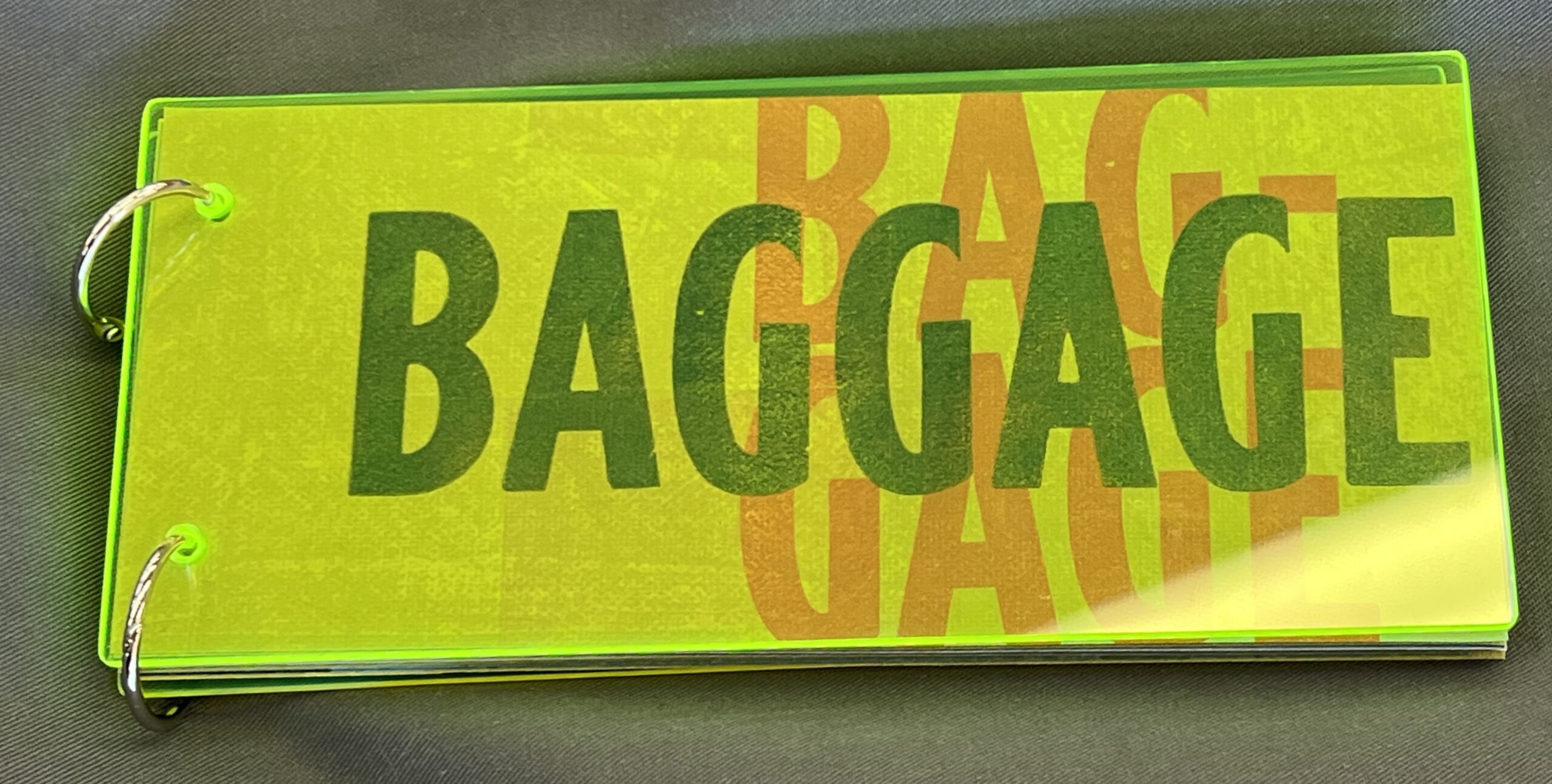
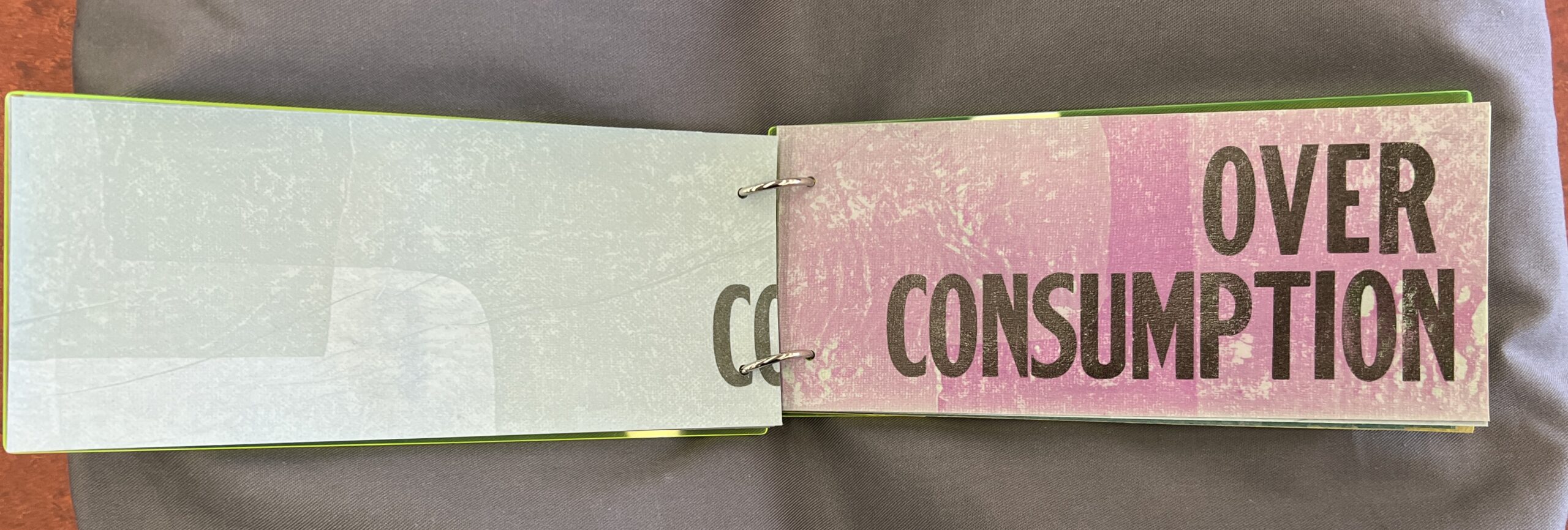
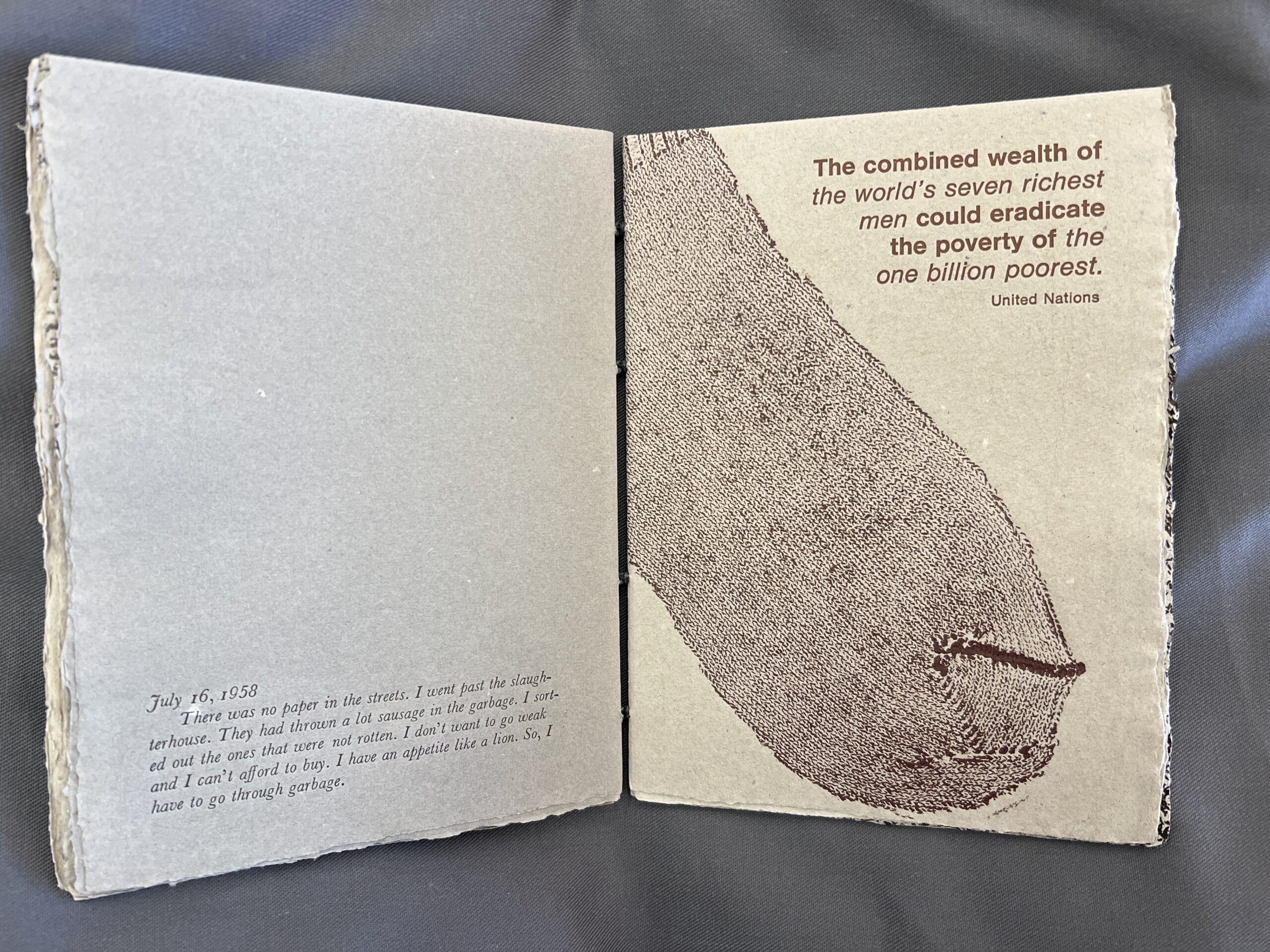
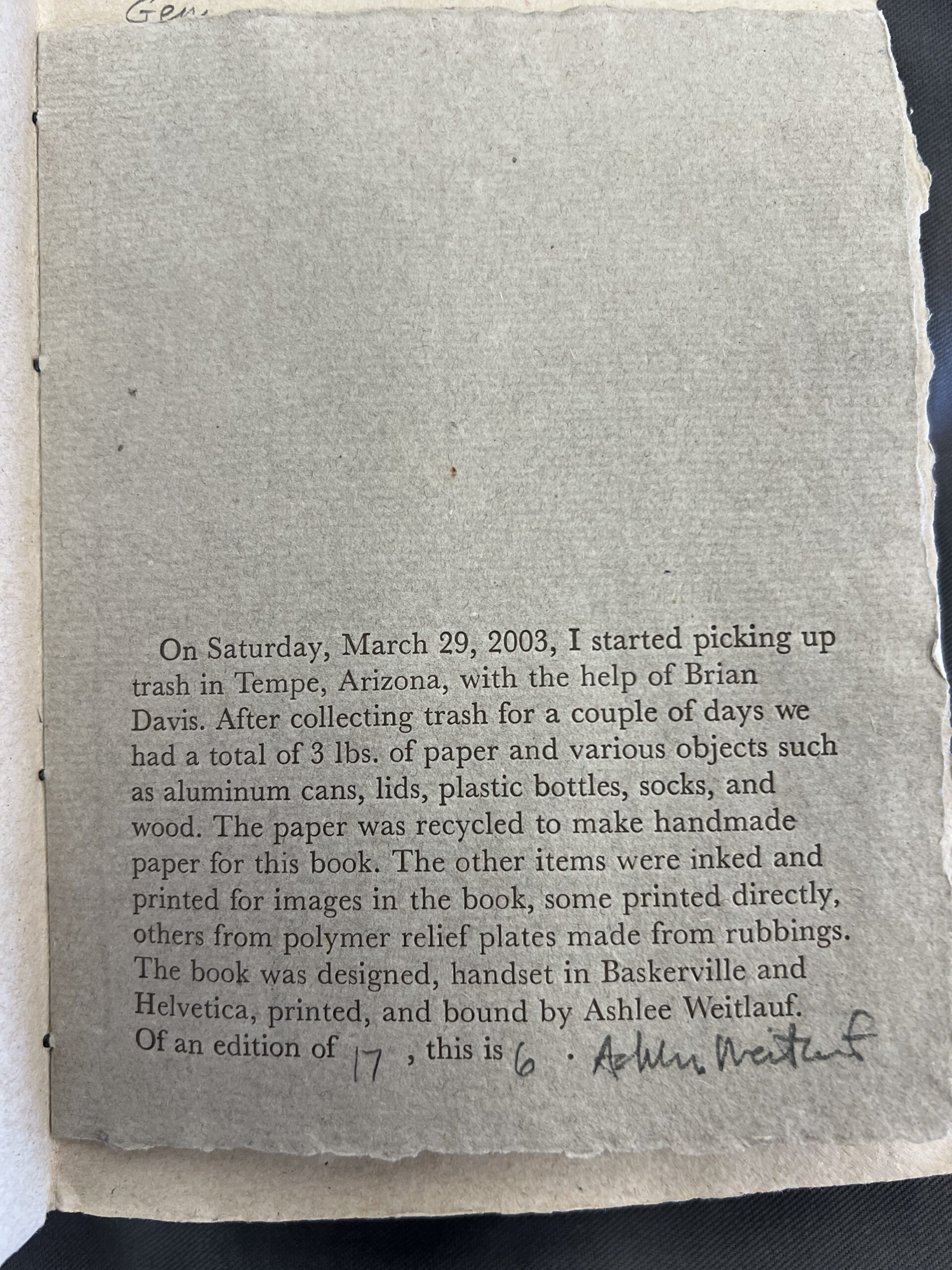
The sense of minor transgression in placing them next to historic rare books that would be collected by a Romantic era bibliomaniac is a curation of contrasts and the subversion of anticipated affects in the special collections classroom.
The broadness of artists’ books is an affordance – the categorization of an artists’ books is less important than connections made with it. In Yasmine Ostendorf-Ramirez’s interview with Giuliana Furci of the Fungi Foundation the latter shared, “to find wild mushrooms in a forest, you have to be in a state of receptiveness, a state of openness to an encounter.”[13] If one goes foraging for mushrooms—or rare books—by strict definitions our encounters are limited by our expectations. If we are open to finding and feeling rarity in new valences, we will.
As educators, as researchers, as curators, we can lead by example in modelling this shared de- and re-construction of rare care. Rare care brings forth a multitude of responses.
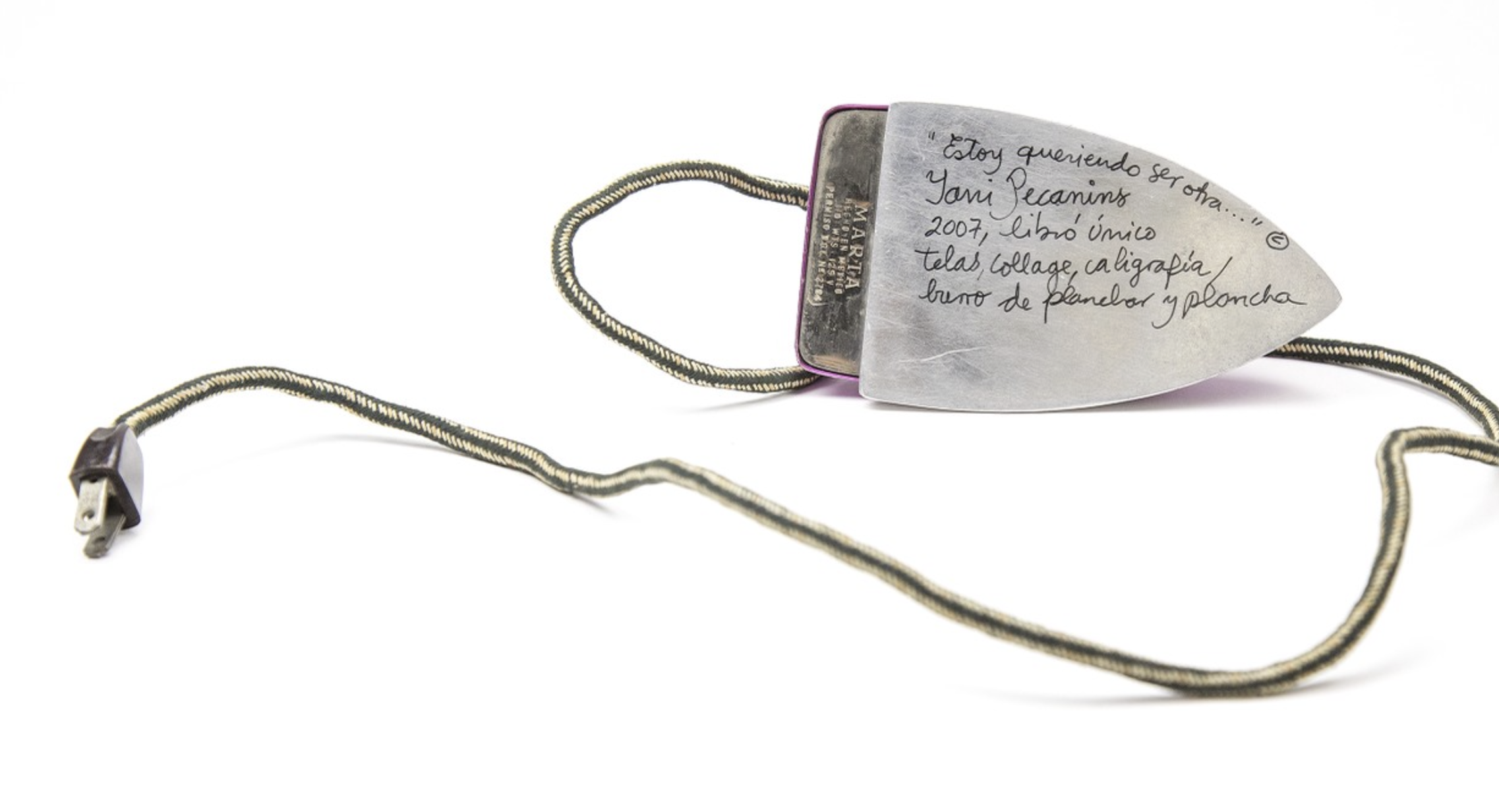
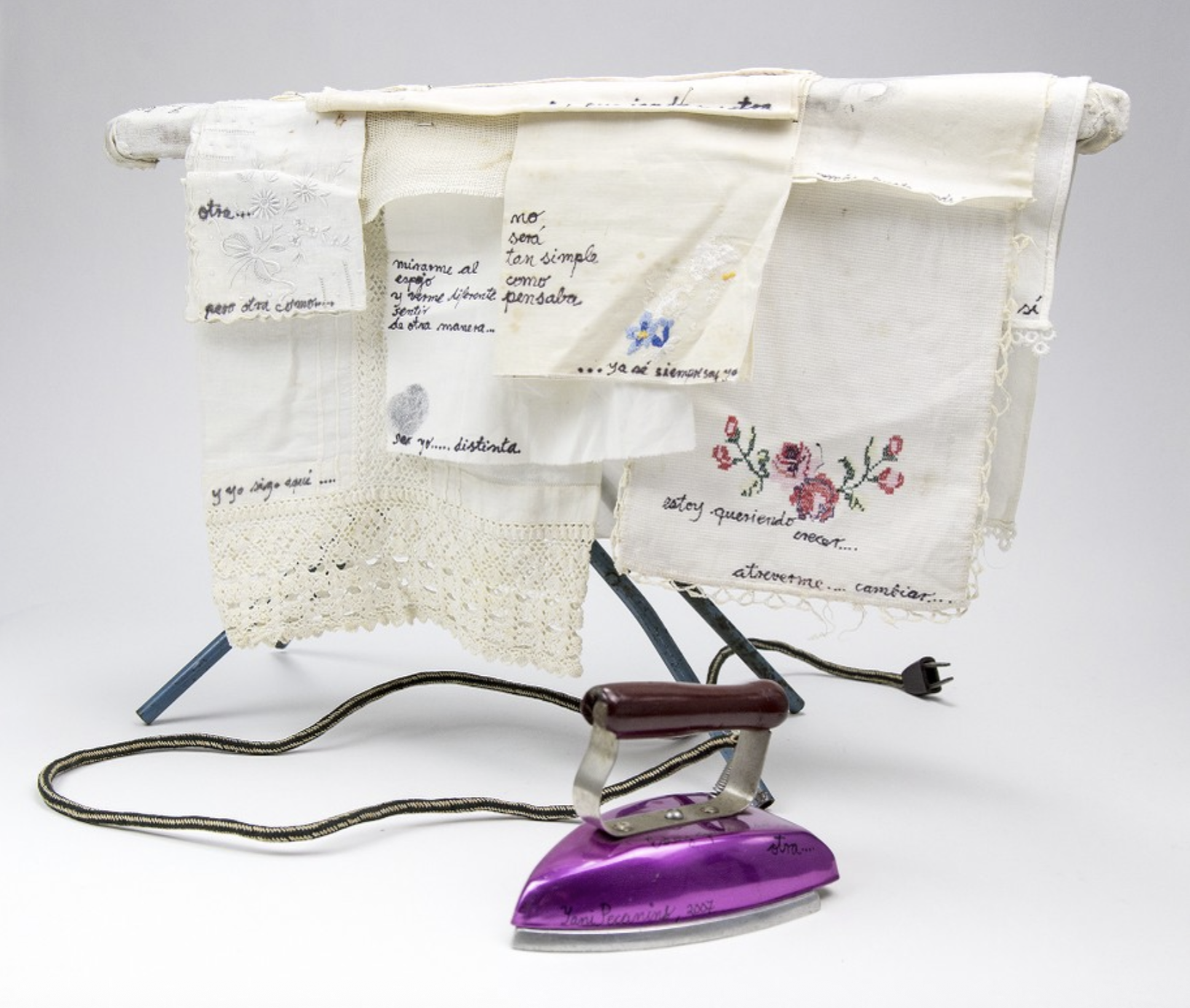
Depending on the outreach context, a work like Yani Pecanins’ Estoy Queriendo ser Otra (2007) elicits early identifications ranging from toy to sculpture to book. Conversations evolve into “Would it be a book if there was no text?” or “If you don’t read the language this text is in, is your impulse to translate or consider who is this for?” Jane Carlin and Sha Towers recount their centering of affect in university special collections classes in a 2024 article. Students at Baylor University were prompted to select an artists’ book “that you find meaningful or that speaks to you and reflect on why.”[14] These responses, in alignment with scholar-practitioner Sam Regal’s argument that artists’ books support object-based learning and critical visual literacy, formed the basis for analytical and creative final course projects.[15] With activations of artists’ books, pedagogical goals are met, and students are engaged with affectively as well as intellectually. Alongside ongoing movement away from requests for letters of introduction, terminal degrees for access, and panopticon reading rooms, practitioners can create new cultures.
As we navigate the balance between our commitments to preservation and access, a rare-as-personal book culture highlights curation, as, with the roots of cura, caretaking in this same vein.
Bringing rare care into practice, for the exhibit “Particularities: Self & Society” at UC Irvine I centered personal interventions in and through collections materials. I exhibited ex libris and early modern marbled endpapers alongside artists’ books and student-made zines. To move the exhibit space away from curatorial authority and toward participatory reflection, I integrated questions into some exhibit text.
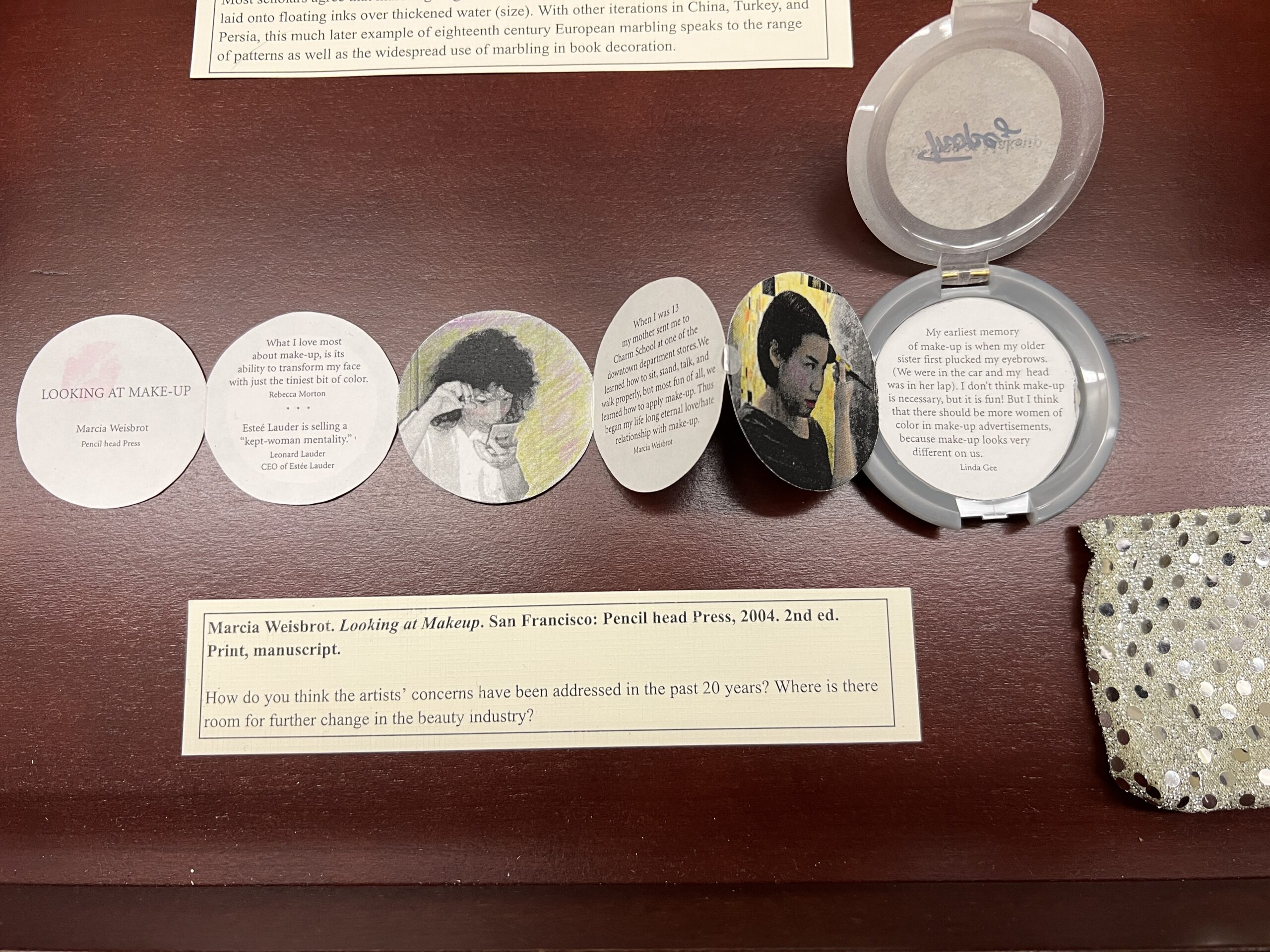
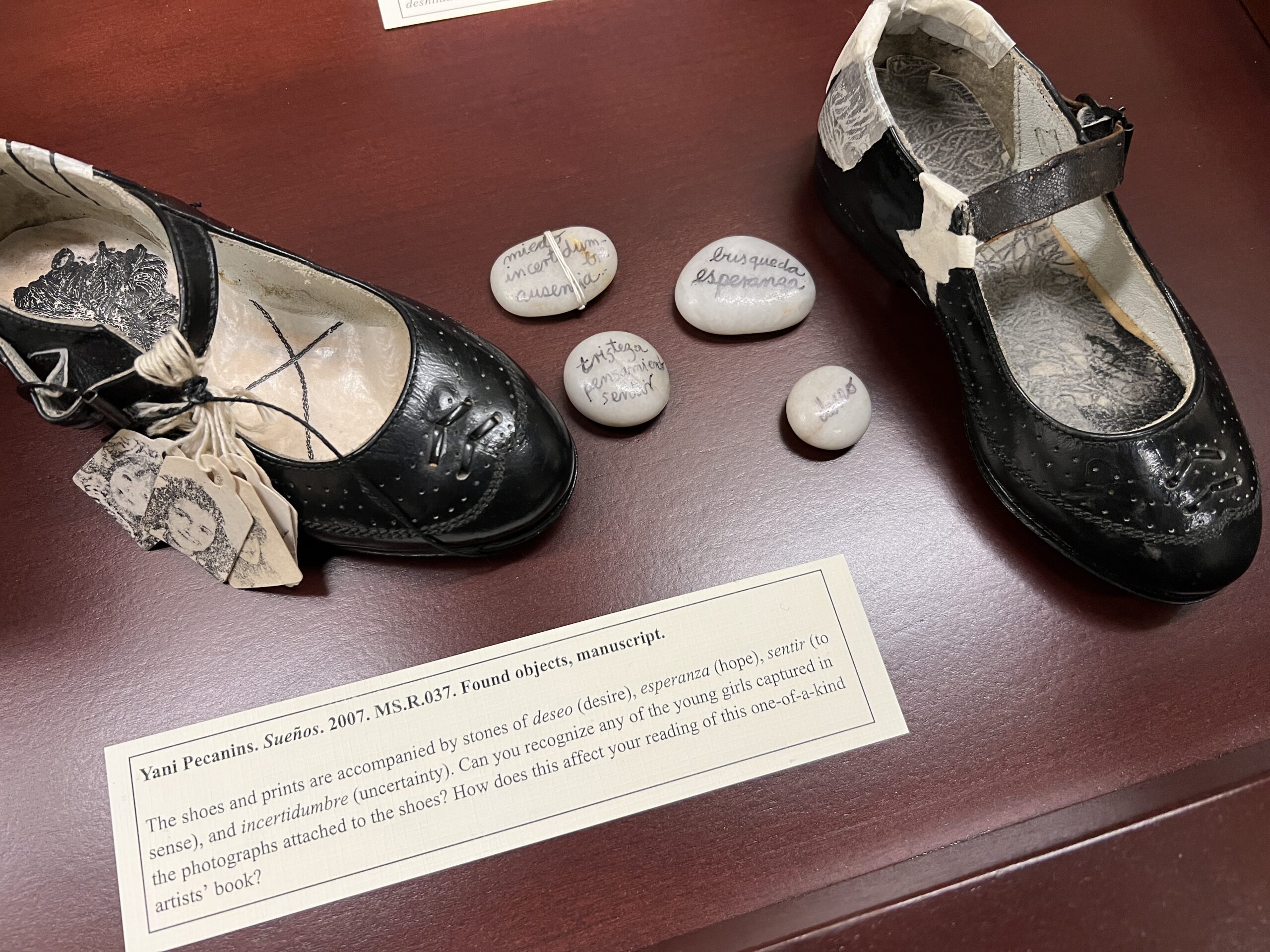
This modality was inspired by Anna Tsing’s recounting of a matsutake mushroom enthusiast and forest caretaker, Andy Moore. Moore created a website of his findings that was not a univocal blog, but a regularly updated shared platform for “the making and exchange of knowledge.”[16] Curation, whether in an exhibit or classroom, can be multidirectional. Shared authority and affect is rare care.
In the special collections classroom, artists’ books can generate reflections and conversation, especially through comparison. Joan Lyons’ The Gynecologist (1989) responds directly to early modern scientific referents, including Vesalius’ Anatomia. The text of The Gynecologist, recounting Lyons’ frustrating interactions with a doctor, is paired with Xerox copies of early modern depictions of the uterus and gynecological instruments. (During SHARP 2025, Lyons told me she covertly made copies of books from the University of Rochester medical library for her work). This pairing reflects the artists’ process, as Lyons’ experiences of misogyny as a patient led her to a fruitless search for a single “book or article on gynecology, in the medical library of a teaching hospital, written by a woman.[17]
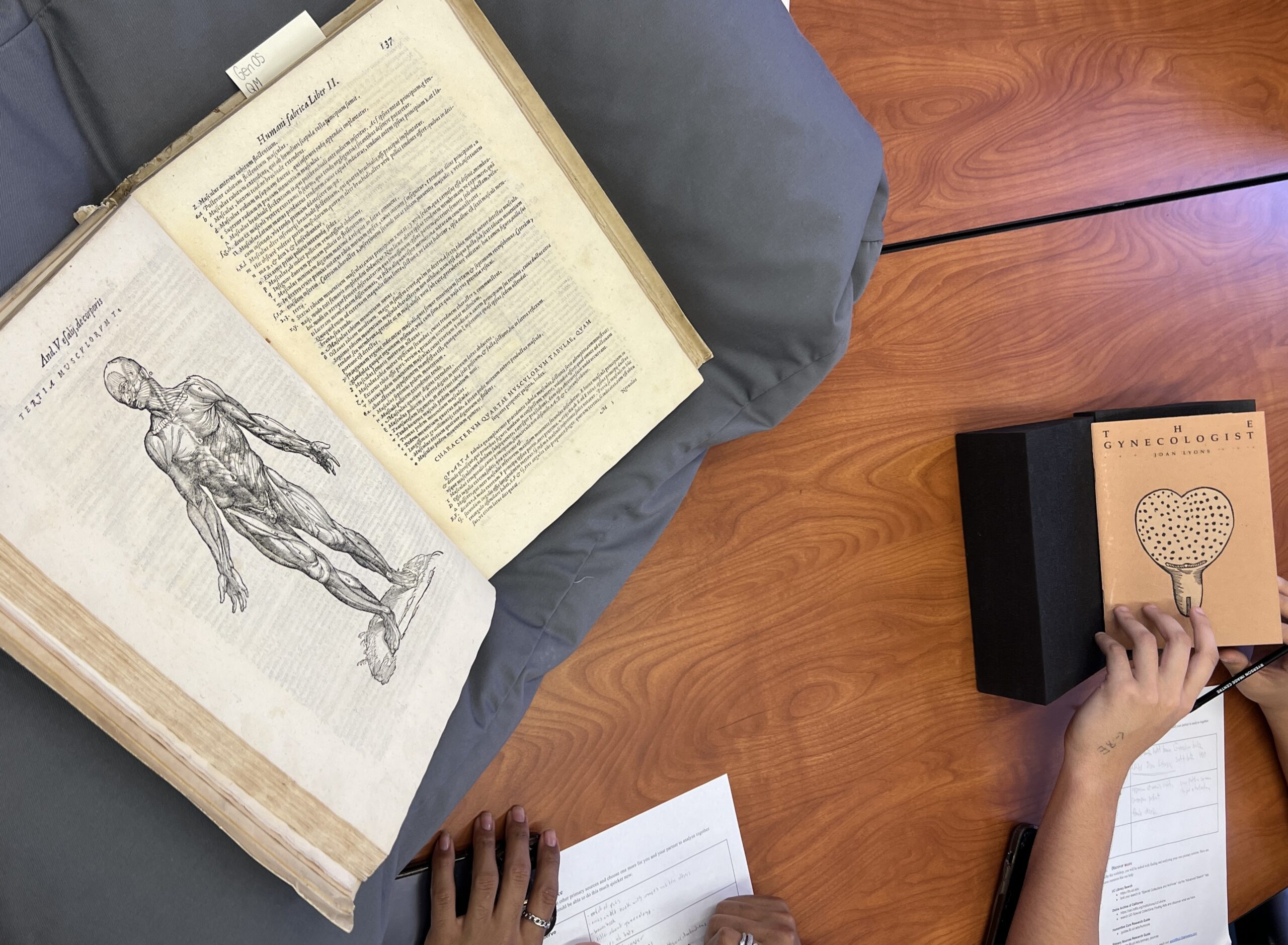
In an undergraduate class, students are invited to reflect on continuing impacts of these narrative gaps and social-historical silencings. The pairing prompted one student to share with her tablemates that seeing these works felt like “signs” of her interest in becoming a physician. Another student, unprompted, told me, “That book was cooler than the medal!” The medal in question? Frederick Reines’ Nobel Prize in Physics.
Whether topically focused on history or the literary canon, personal experience or abstraction, artists’ books are often political, and “affect theory offers needed avenues for challenging dominant normative structures through which power, privilege and oppression are enacted.”[18] For instance, as artists’ books often undermine the expected format of the codex, Suzy Taraba argues for queer readings of the form of artists’ books in addition to their text.[19] Book artist Clarissa Sligh’s works explicitly bring “issues of social justice into the public discourse.” Her 2005 It Wasn’t Little Rock blends multivocal personal reflections with legal testimony from her experience as lead plaintiff in an Arlington, VA school desegregation case.[20]
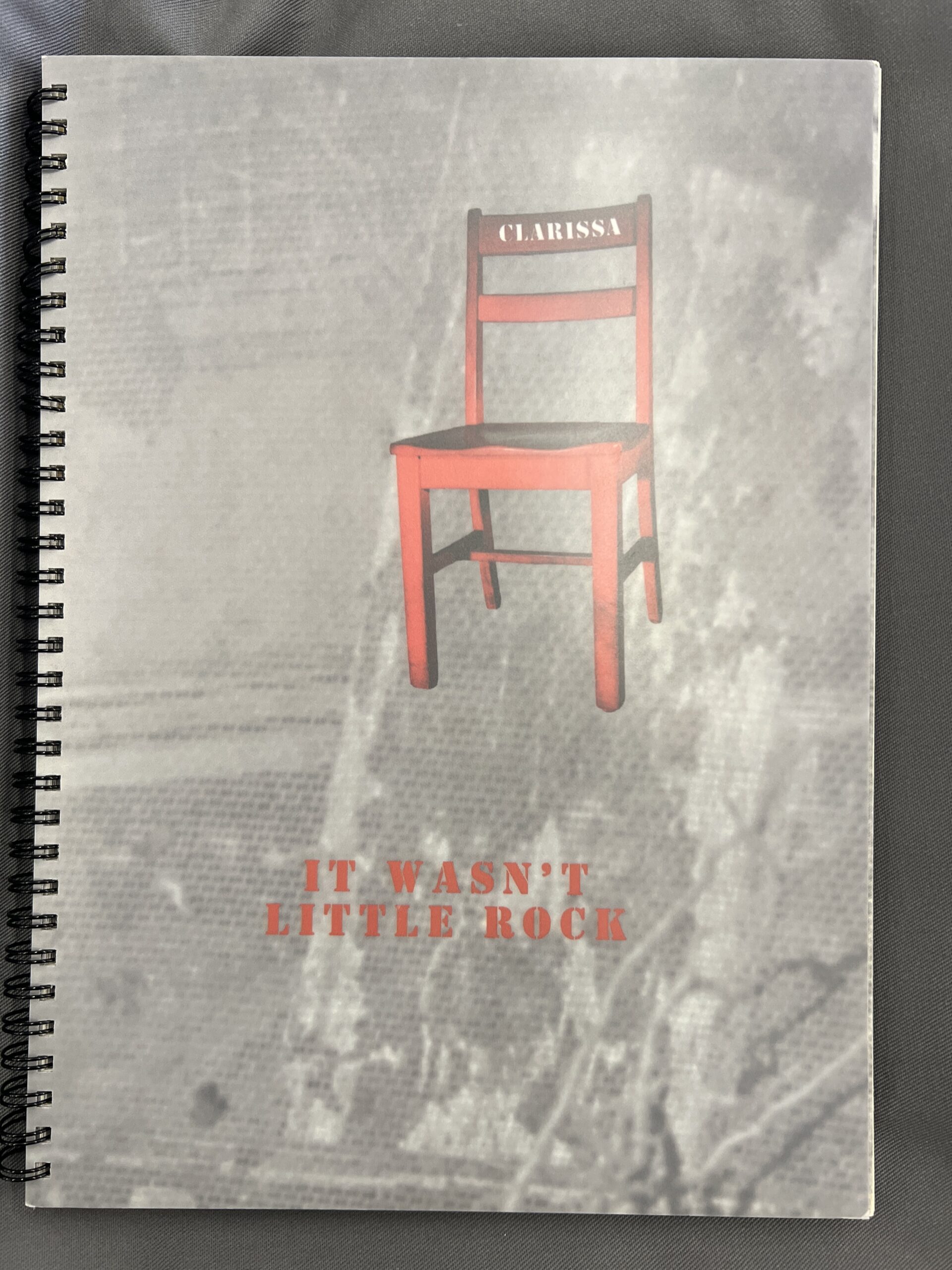
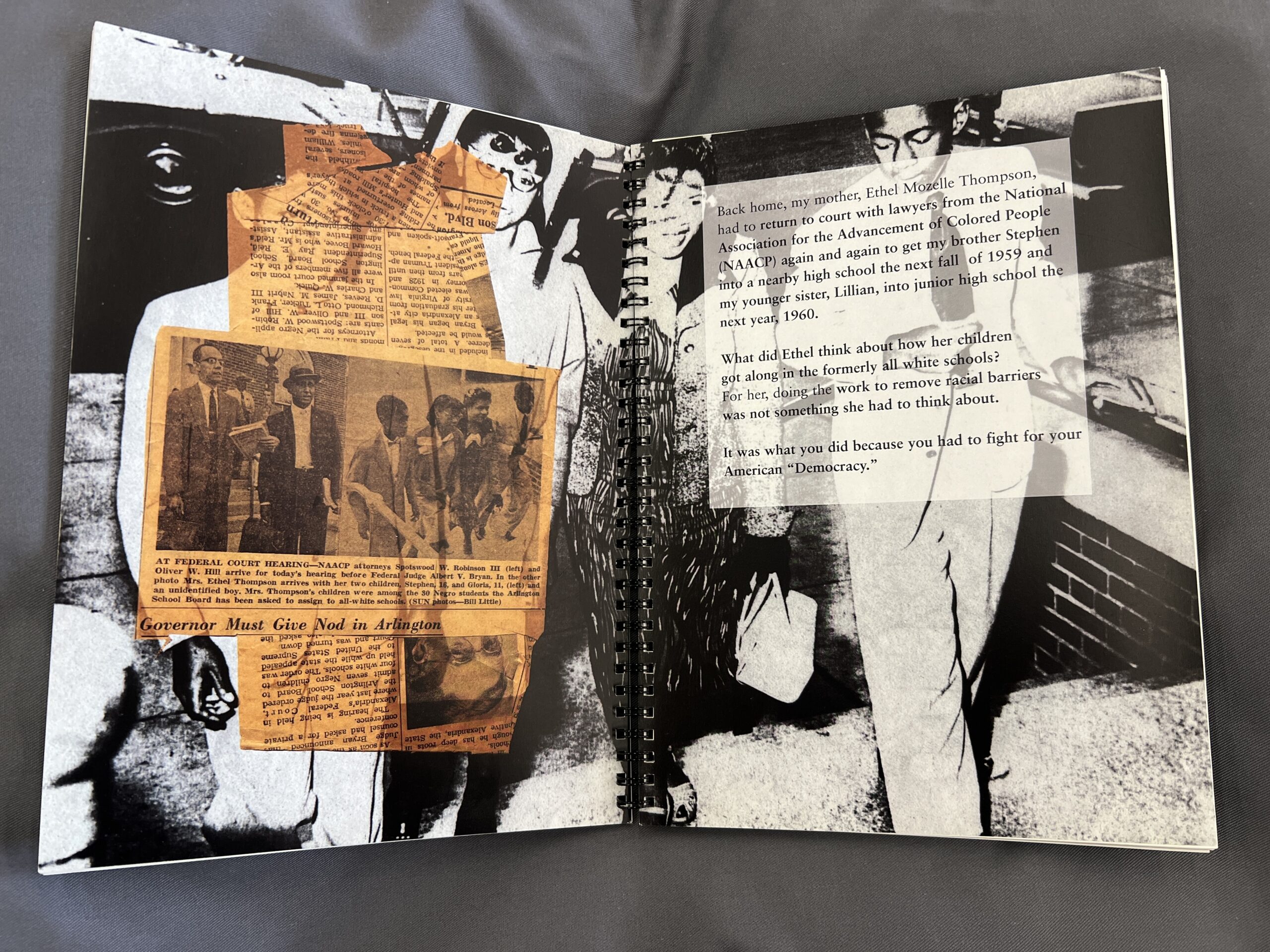
Centered as primary sources, artists’ books can be shared and analyzed in political climates in which secondary historical sources are increasingly challenged, censored, and banned.
Artistic application or complication of principles beyond “discovery” or inception of a technology or practice also supports a collaborative and iterative view of history. Artists’ books can inspire students, as seen at Baylor, to both enter and craft their own conversations. Rare care does not stop at how materials are used in or even acquired for the rare book library. It continues in those who engage individually and collectively with them.
While artists’ books are a tool for building a book culture of rare care in the special collections library, the takeaway is not that you need to build a collection of artists’ books. Rare care highlights intentions and questions. Intentions behind what and how we highlight the material histories in our care to all of our users. And, the questions we ask-in exhibit text, in class sessions, or when we support programming with “development potential.” We can be open to re-knowing, reframing, and recelebrating rarity-whether it is on a classroom table, under display glass, or verbalized by a first-year student. In gesturing to the affective roots of bibliomania and of rarity as traditionally upheld in the rare book trade and institutional libraries, we have foundations to enact and invite care as rare. When I ask at the end of a special collections instruction session what stood out to students, their responses are experiential. Relative.This is older than the U.S. Or my parents…. It feels delicate. These newspapers were like those students’ social media. This doesn’t look hundreds of years old. And, of course,this smells good. Curation is care. Care is rare, and rare is personal.
[1] David McKitterick, The Invention of Rare Books: Private Interest and Public Memory, 1600 – 1840 (Cambridge University Press, 2018), 306.
[2] Philip Connell, “Bibliomania: Book Collecting, Cultural Politics, and the Rise of Literary Heritage in Romantic Britain.” Representations 71 (2000): 24 https://www.jstor.org/stable/2902924.
[3] McKitterick, The Invention of Rare Books, 254.
[4] McKitterick, The Invention of Rare Books, 231.
[5] Karen Eliot, “The Root of the Matter: Artists’ Books in the Twenty-first Century” in Freedom of the Presses: Artists’ Books in the Twenty-first Century (Booklyn, 2018), 39.
[6] Jennifer Jae Rossman, “Changing Attitudes Toward Access to Special Collections,” Transactions of the American Philosophical Society 110, No. 3 (2022): 131 https://www.jstor.org/stable/45420504.
[7] Rebecca Romney, “On Feminist Practice in the Rare Books and Manuscripts Trade: Buying, Cataloguing, and Selling” Criticism 64, no. 3 (2022): 416. https://digitalcommons.wayne.edu/criticism/vol64/iss3/13.
[8] Walter Benjamin, “Unpacking my Library: A Talk About Book Collecting” in Illuminations (Shocken Books, 1968), 66; McKitterick, The Invention of Rare Books,63.
[9] Suzy Taraba, “An Early Lesson in Touch and Tact: A Queer Community of Books,” in Freedom of the Presses: Artists’ Books in the Twenty-first Century (Booklyn, 2018), 86; Nola Farman, “Artists’ Books: Managing the Unmanageable,” Library Management 29, no. 4/5 (2008): 320; Marcia Reed and Glenn Phillips, Artists and their Books, Books and their Artists (The Getty Research Institute, 2018), 9.
[10] Joan Lyons, Artists’ Books: Visual Studies Workshop Press, 1971-2008 (Visual Studies Workshop Press, 2009), 11..
[11] Taraba, “An Early Lesson in Touch and Tact,” 94.
[12] Reed and Phillips, 5–6.
[13] Yasmine Ostendorf-Rodríguez, Let’s Become Fungal!: Mycelium Teachings and the Arts (Valiz, 2023), 152.
[14] Jane Carlin and Sha Towers, “The Power of Artists’ Books: Catalysts for Creative Thinking Across the Curriculum” College & Research Libraries News 85, no. 5 (2024): 210.
[15] Sam Regal, “Artists’ Books and Critical Literacy Pedagogy: Kara Walker’s Freedom: a Fable” RBM: A Journal of Rare Books, Manuscripts, and Cultural Heritage 25, no. 1 (Spring 2024), 85. Carlin and Towers, “The Power of Artists’ Books,” 210.
[16] Anna Tsing, “Arts of Inclusion, or How to Love a Mushroom,” Mānoa 22, no. 2 (2010): 197. https://www.jstor.org/stable/41479491.
[17] Lyons, Artists’ Books, 75.
[18] Marika Cifor, “Affecting Relations: Introducing Affect Theory to Archival Discourse,” Archival Science 16 (2016): 27.
[19] Taraba, “An Early Lesson in Touch and Tact,” 94.
[20] ‘Transforming Hate: An Artists’ Book,” Clarrisa Sligh, accessed June 12, 2025, https://clarissasligh.com.