
Selected Letters of Wilfred Owen. Ed. Jane Potter.
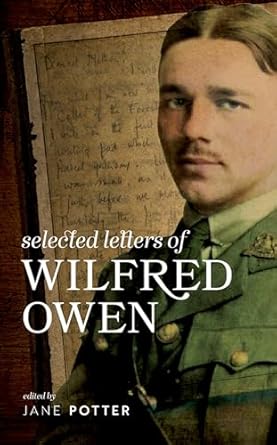
Selected Letters of Wilfred Owen, ed. Jane Potter. Oxford and New York: Oxford University Press, 2023. 464 pages. ISBN 9780199689507. US $32.95 (hardcover).
The pattern of a poet’s life and the rich variety of his moods, ideas, and concerns emerge in the letters of Wilfred Owen, who has become an iconic representative figure of the Great War. Jane Potter, Reader in Arts at Oxford Brookes University, has given us an opportunity to appreciate Owen in the context of his time. Potter is the editor of A History of World War One Poetry (Cambridge University Press, 2023). She has restored the text of Owen’s letters, uncovered omissions of names and sentences, and reinstated previously redacted copy. This includes content censored in pencil and ink by Owen’s brother Harold, who redacted material he believed indiscrete with respect to family sensitivities about the war, sexuality, or family members. Potter has added twenty-three letters or postcards beyond the selected letters previously edited by John Bell (1985) and has amended Bell’s footnotes. This cleanly edited volume offers an autobiographical account of Owen’s life in letters and brings us into Owen’s Edwardian world before the war, or what Owen called “the abode of madness” (Letter 481, p. 244).
Wilfred Owen’s letters—many of which he wrote to his mother, Susan Owen—are lyrical and reflect his rich imagination and poetic cadence. They range from the wry and humorous to the serious and anguished. The letters provide images of the veteran’s experience and reflect the lives of people of his generation. The trajectory of Owen’s attitude toward the war, like that of many of his compatriots, moves from early enthusiasm to more sober assessments. Owen begins chronicling his experience of war in June 1915, stating “I now do most intensely want to fight” (Letter 357, p. 174). In the last months of the war, before his death, he writes of “groans of the wounded” and those who “could not move from a small trench” (October 6, 1918, Letter 663, p. 399). Yet he insists that unlike the poet Shelley, who penned “Stanzas Written in Dejection” (1818), “these are not lines written in dejection. Serenity Shelley never deemed crowns me” (Letter 649, p. 387).
This edition’s clear presentation helps us to better understand Wilfred Owen’s life and his literary reference points. The text is structured in five sections that present letters from phases of Owen’s life from 1902 through 1918. Notes and commentary in italics accompany some of the letters. A few of Owen’s drawings are also included. An appendix indicates where Owen’s manuscripts are held, and there is a select bibliography of biographies and critical studies and a chronology. Overall, Jane Potter has provided a service to scholars and to general readers who seek Owen’s voice, experience, and thoughts alongside further insight into his poetry.
Robert McParland, Felician University