
In Defence of Publishing before Print
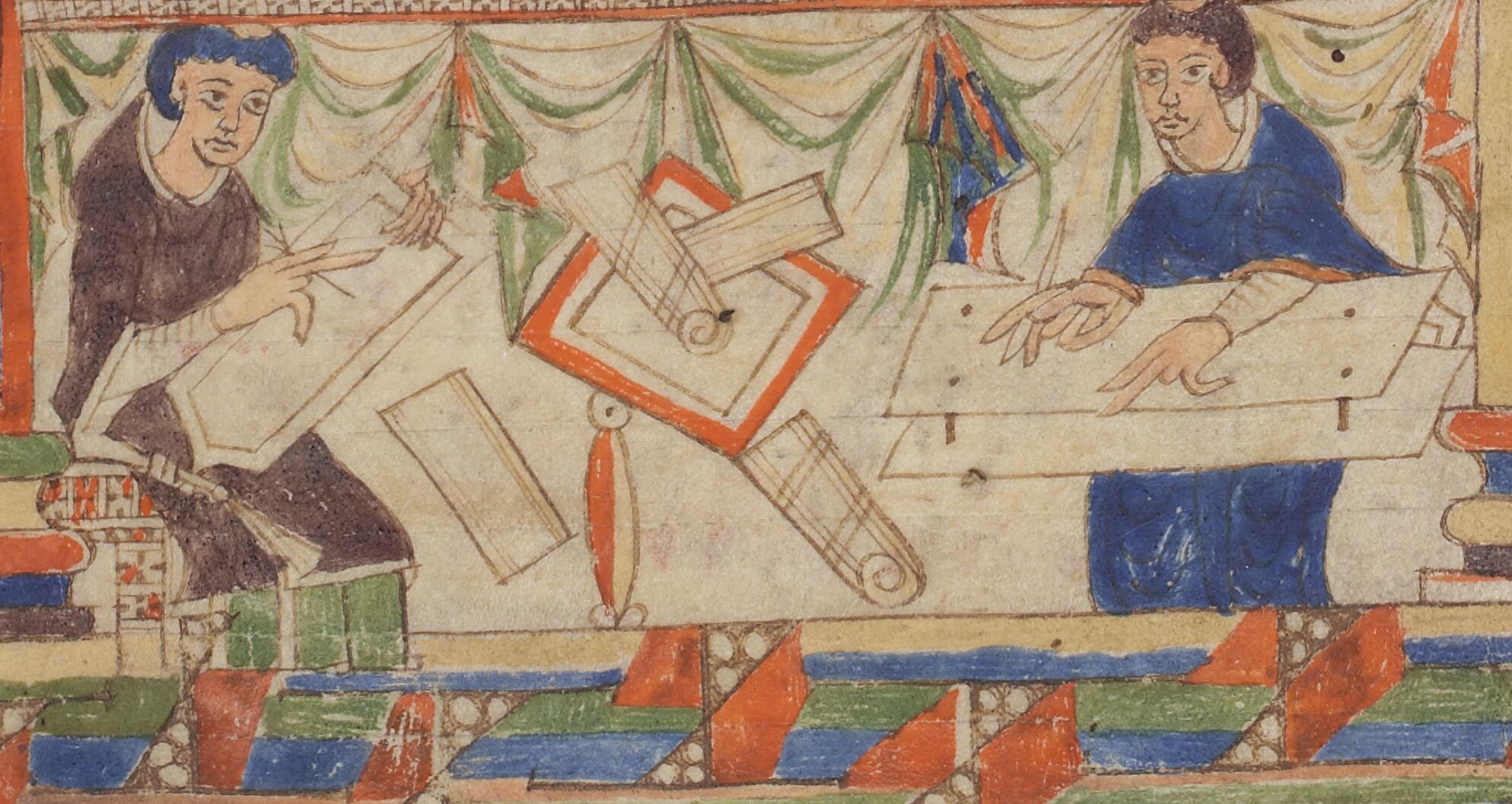
In ‘making books and distributing them’, the scriptoria of medieval monasteries have in recent discourse been referred to as ‘the earliest publishing houses’. The analogy belongs to Christopher de Hamel, and it comes at the very start of the first chapter of his 2022 trade book, The Posthumous Papers of the Manuscripts Club.[1] De Hamel makes his statement unabashedly. The equivalence is, after all, straightforward enough to understand and, given De Hamel’s at least part-public audience, his point would probably suffer if overcomplicated. Medievalists writing in more scholarly contexts, however, regularly tie themselves up in knots over this simple question: can a medieval manuscript, or indeed any form of textual codification that happened prior to the printing press, be referred to as a form of publication?[2] The aim of this short polemic is to argue why medievalists, and scholars more widely, could and should operate without anxiety by channelling De Hamel’s confidence when positioning the pre-print books they study as products of publication.
The barrier to this comfortable and confident adoption of publishing terminology for pre-print (or even non-print) contexts usually has to do with the mid-fifteenth-century advent of print technology and the perception of it as transformative. Gutenberg’s press, after all, can justifiably be positioned as catalysing a genuine revolution: both formats and business models in the book trade developed substantially as a result, and with almost immediate effect. It is therefore easy to understand the urge to separate the ‘before-times’ from the ‘after-times’. But at the same time, technology is rarely introduced or developed without reason. The book trade had been scaling up its practice in response to increasing demand since well before 1440, and the evidence for this can be seen in various initiatives, from options for faster, more economical forms of handwriting (as seen on poster sheets showing options for different hands – usually referred to as Schriftmusterblätter – that might have adorned the walls of commercial scriptoria) to having ‘production lines’ of scribes copying various quires of a single book simultaneously.[3] Seen in this context, Gutenberg’s press was a looming inevitable: a necessary technological development that would enable the book trade to meet demand and to expand. Except perhaps in terms of its remarkable success, it holds no special distinction from any other example of business-driven technological progress. Even the press’s first books were designed to look just like manuscripts, to act as ‘surrogates’ to use Jane Taylor’s term,[4] so the resulting difference for the consumer was far less about the product than it was about distribution. If the printing press merely served to expand – albeit wildly successfully – a business already in train, even producing broadly equivalent products, then what grounds are there for celebrating Gutenberg’s press as the instigator of publishing, to the extent that only print equals published? I would argue none.
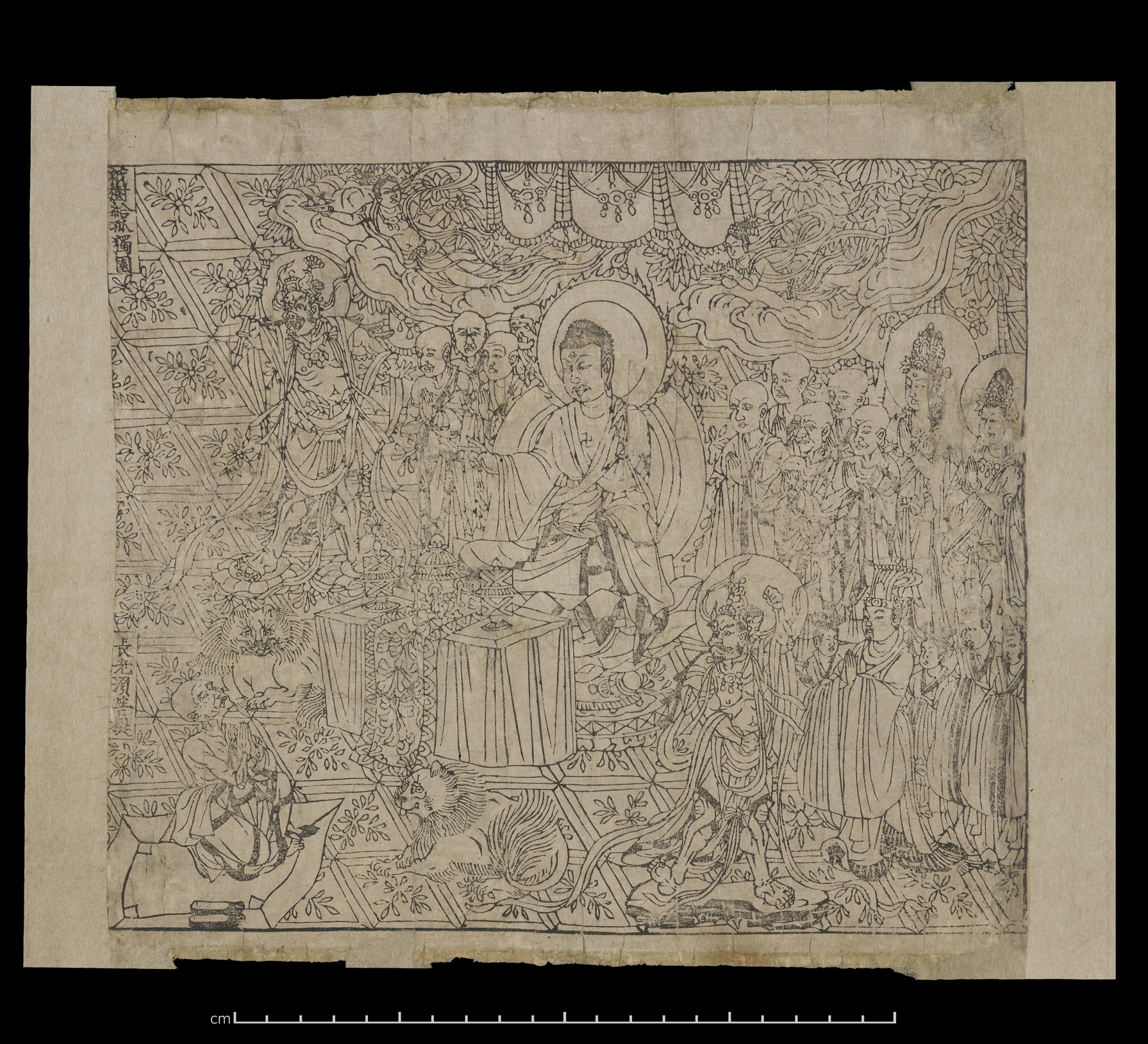
Pioneering though his invention was, Gutenberg was demonstrably not the inventor of printing. Rather, he developed a form of moveable type and a process for producing it that was itself based on a technology adapted from his former trade as a goldsmith.[5] Book printing with moveable type began in China in the eleventh century. And even before that, books were produced there using block printing at least as early as the ninth century, while printing texts using ink rubbing is in evidence as far back as the second century BCE.[6] By the standard that publishing only began in 1440 after Gutenberg, were China’s much earlier printed books therefore not published? Such a view clearly is unsustainable, all the more so when we acknowledge that the concept of publishing in early China was not solely linked to its advanced printing technology. Scholars such as Ann Blair have shown that print was just one amongst many media (including writings on silk and bamboo, as well as oral diffusion) used for the formal publication of textual material.[7] In short, oral, manuscript and printed formats all co-existed within a single, multi-format publishing world, where each format had a discrete purpose and suitability depending on the product in development. In China, print’s advantage was – quite naturally – in its multiplicity and durability (i.e. survival was more assured where there were hundreds rather than a handful of copies), but that did not necessarily make it the right – let alone the sole – medium for all forms of publication.
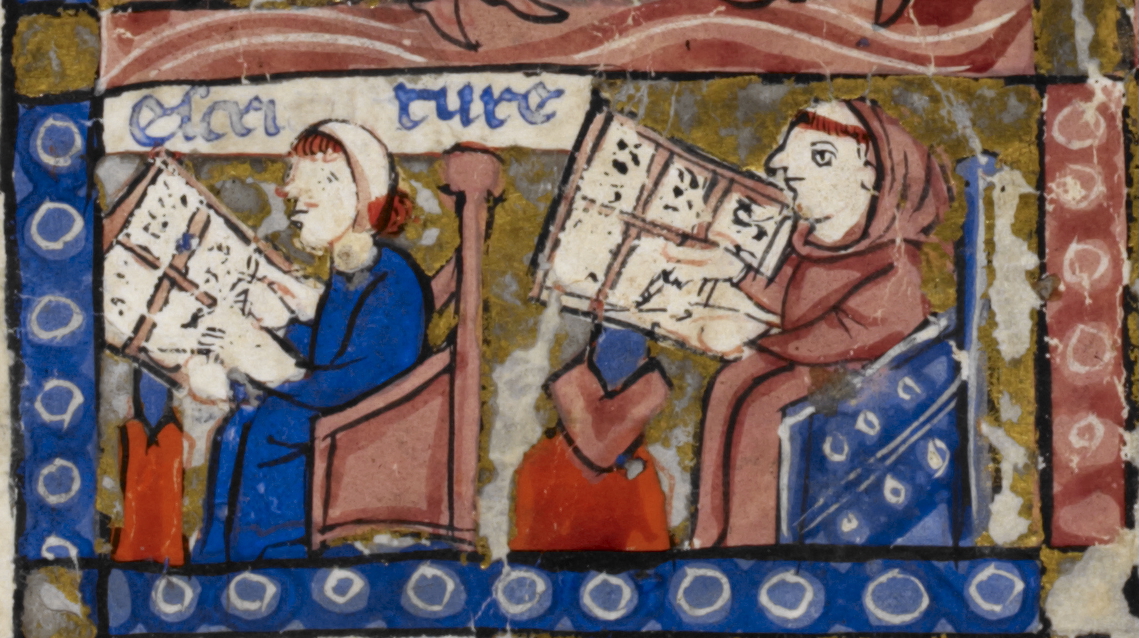
Such co-existence of textual formats, even long after Gutenberg’s press took off, was also clearly in evidence in early modern Europe. Manuscripts were produced alongside printed books for centuries, with consumers not suddenly switching allegiance, but rather habitually buying both, as Alexandra Walsham and Julia Crick have argued.[8] David McKitterick has even shown that, in urban commercial scriptoria especially, the same sets of artisans would often operate routinely across both media, offering manuscripts for bespoke commissions at the same time as speculating on what titles might sell in multiples and thus be suitable for print.[9] Such a mixed economy is also reflected by the fact that the penchant of libraries for shelving early printed books separately from manuscripts is a modern preoccupation, one not at all reflected by early library practice, as Walsham and Crick further note.[10] Clearly, European book consumers continued to appreciate both formats and, just as their early Chinese forebears, selected the one that best suited their reading purposes. Gutenberg’s technological revolution undoubtedly brought speed, volume and wider dissemination to the book trade; it also brought greater choice for the consumer. Still, though, none of these considerable advantages – not even the combination of them – can reasonably be cited as making a difference to whether a book is or is not published.
In the simplest sense, to publish is to make public, but still much ink has been spilled in the discussion of a) what constitutes publication and b) how to determine the point at which something becomes published. In a manuscript context, for instance, it is rather more complex to discern the precise moment at which a text enters the (or a) public realm than it is with a printed product. Occasional scribal colophons aside, there are rarely the kinds of helpful printed ephemera, such as title pages containing places and dates of production, that can help to pinpoint such matters. Nonetheless, scholars – myself included – have directed attention to certain key events, such as a work’s presentation to its patron or the indication of an intention and/or permission to disseminate further, as marking the crucial ‘moment of publication’.[11] Such proposals make particular sense in the realm of what has come to be known as ‘authorial publication’ (defined most authoritatively by Samu Niskanen),[12] but become convoluted in other contexts. How do we define, for example, later copies that have been much altered thanks to the hazards of transmission, both purposeful and otherwise? Are these copies any less published than ones ‘authorised’ either by an author (in the strict, modern sense) or another agent (or auctor)? Are they the equivalent of ‘revised editions’, published anew?
It would be easy to dwell on this problem of the ‘moment of publication’ here; this moment does, after all, effect a clear watershed between private and public, and the matter of what this moment initiates – dissemination – is absolutely central to any discussion of publishing. And yet, to focus on defining this single moment is to detract from understanding publishing as process, or rather as a series of processes that both succeed and – crucially – precede it.
Even in the modern trade, publishing typically starts from the completion of the final authorial draft of a text (sometimes itself preceded by a commissioning and supervised drafting process), before moving to the text’s editorial treatment (including copy-editing and proofreading, as well as matters such as factchecking). From there, the text moves into production (including mise-en-page, material make-up and composition/commissioning of paratextual matter, such as illustration), and then onto its marketing and publicity drive, all culminating in the published product’s sale and/or consumption. And the processes do not stop there: if the product is successful, more may yet be to come, from revision and republication to remediation and repackaging. Every single one of these preparatory stages finds a direct analogue in the preparation of medieval manuscripts for their intended audiences. Even a scholar sceptical of the notion of pre-modern publishing on the basis that there is a difference between print and pre-print as to when an item becomes published and what happens thereafter (i.e. mass vs. circumscribed dissemination) would surely not deny that the various preparatory stages are closely aligned. Moreover, the multiplicity and collaboration of artisans involved in that process of medieval book preparation, from scribes to parchment makers, from illuminators to bookbinders, are themselves reminiscent of the various departments of a modern publishing house. The similarity is perhaps most clearly shown in urban centres of book production, where book trade artisans set up shop in close proximity with one another, enabling them to work on projects together.[13] Sometimes, a so-called marchand-libraire would even project-manage the production of a book, by commissioning different artisans/workshops to carry out the various processes required, operating not dissimilarly from a modern editorial director.[14] In short, if we can accept publishing as the process of preparing a text for dissemination to a given audience, there is no reason why the fact of its preparation as printed or not printed should affect our perception of it as such.
To take this point through to its logical conclusion, I would like to invite us to consider another change of publishing format, one where once again the final product is not printed. The launch of the Amazon Kindle in 2007 marked an acme in the acceptance of the ebook as a viable reading format for the masses. At the same time, fears of ‘the death of the book’ travelled far and wide, especially in the popular press. I am paraphrasing, of course, but the tenor of the argument that typically accompanied such gloomy pronouncements was that this technological advancement would enable readers to carry thousands of books with them wherever they went and thus signalled the end not only of physical books, but also of a publishing trade in existence since Gutenberg.[15] Albeit undeniably appealing to general audiences for its sensationalism, this assessment was multifariously flawed, not least because the publishing trade itself had long since ceased operations that would have been familiar to Gutenberg and his followers. One could go on at length about the various changes to business and distribution models across the six centuries, but perhaps most fundamentally, copy by at least as early as the 1980s was invariably created and stored in digital formats, and then printed direct from those files. The original printing press, with its formes and type, was already obsolete because technology had necessarily reacted to consumer demand for more volume, more product and more speed. Sound familiar?
Importantly, in 2025, it is clear that ebooks have not spelled the end for physical books – far from it. Rather, the availability of ebooks has had the effect of giving consumers greater choice, offering them the option to choose a format as befits their purpose, much as printed books did for the book consumers of the fifteenth century. They are not even the only non-print book products that publishers produce: audiobooks, first on vinyl, then on tape and CD, and now downloadable and/or streamable, have been an undisputed mainstay of the publishing business since at least the 1950s. Rather than ditching older formats in favour of new ones, history both distant and recent has taught us that behavioural change in consumers in respect of book products is actually far more gradual, and it takes a very long time indeed for an older format to become obsolete – if it ever actually does. Nowadays, by way of just one example, a consumer might opt to purchase lavishly-illustrated hard copy books for display on their coffee tables, paperback books for private reading and ebooks/audio books for commuting/travelling. So with digital formats comfortably co-existing with printed ones, it is no surprise that the publishing trade has also neither ceased its operation, nor come to be perceived as something else entirely. It has adapted and diversified, of course; it has kept pace with technological progress and consumer demand, because to do otherwise is to face oblivion, as in any business. But regardless of the formats it produces at any one time, whether print or not, the process of their preparation is still called publishing.
Michael Clanchy once argued in favour of seeing the pre-print book trade as an earlier model of the publishing business. In this, he suggested that it made more sense to see the advent of print as marking a ‘culmination’ of previous activity, rather than a ‘new age’ in the book trade.[16] And in one sense he is quite correct to push the angle of Gutenberg’s innovation as a response to all that came before it, just as I have done here. But a ‘culmination’ also suggests that what comes after is no longer on an upward trajectory. Given the continued development and diversification of the trade right up to the digital revolution of the twenty-first century, I would suggest it makes more sense to see print after Gutenberg as just one milestone – albeit an important one – in a lengthy continuum of technological progress in book production. This continuum, moreover, began its life well before manuscript trade of the early and central Middle Ages gained momentum, encompassing, for example, oral and epigraphical contexts and even paleolithic art. It is, though, beyond my remit to do justice to such modes of publication here. Rather my aim has been to defend the notion of publishing in a pre-print culture, and so I close with both a reminder and a question. Gutenberg’s press and the resulting new format brought about a seismic revolution in the book trade, but we should not forget that we have ourselves experienced a significant book trade revolution in living memory. The latter has demonstrably not changed our perception of what publishing is; why, therefore, should the former?
[1] Christopher De Hamel, The Posthumous Papers of the Manuscripts Club (Penguin, 2022), p. 11.
[2] The ERC-funded project, ‘Medieval Publishing from c. 1000 to 1500’, provides a case in point: https://www.helsinki.fi/en/researchgroups/medieval-publishing.
[3] For a discussion of such commercialisation, see Richard H. Rouse and Mary A. Rouse, Manuscripts and their Makers: Commercial Book Producers in Medieval Paris, 1200-1500, 2 vols (Harvey Miller, 1999), I, p. 253.
[4] Jane H. M. Taylor, Rewriting Arthurian Romance in Renaissance France: From Manuscript to Printed Book (D. S. Brewer, 2014), p. 41.
[5] A recent introduction to Gutenberg life and work is provided by Eric Marshall White, Johannes Gutenberg: A Biography in Books (Reaktion, 2025).
[6] For an overview, see J. S. Edgren, ‘China’, in A Companion to the History of the Book, eds Simon Eliot and Jonathan Rose (Wiley-Blackwell, 2009), pp. 97-110.
[7] Ann M. Blair, Too Much to Know: Managing Scholarly Information before the Modern Age (Yale University Press, 2010), p. 29-33.
[8] Alexandra Walsham and Julia Crick, ‘Introduction: Script, Print, and History’, in The Uses of Script and Print, 1300-1700, eds Julia Crick and Alexandra Walsham (Cambridge University Press, 2004), pp. 1-26 (p. 12).
[9] David McKitterick, Print, Manuscript and the Search for Order, 1450-1830 (Cambridge University Press, 2005), pp. 22-52.
[10] Walsham and Crick, ‘Introduction’, pp. 3-4.
[11] See the overview of both scholarly debate and my own intervention in Leah Tether, Publishing the Grail in Medieval and Renaissance France (D. S. Brewer, 2017), pp. 17-20.
[12] Samu Niskanen, ‘Authorial Publication in the Middle Ages’, in Routledge Resources Online – Medieval Studies: History Theory, Method and Historiography (Routledge, 2023), https://doi.org/10.4324/9780415791182-RMEO403-1 .
[13] Tether, Publishing the Grail, pp. 23-24.
[14] Tether, Publishing the Grail, pp. 24-25; Taylor, Rewriting Arthurian Romance, p. 45.
[15] A great, albeit not very recent, overview is offered by Ben Ehrenreich, ‘The Death of the Book: Pity the Book. It’s Dead Again.’ Los Angeles Review of Books (2011), https://lareviewofbooks.org/article/the-death-of-the-book/.
[16] Michael Clanchy, ‘Looking Back from the Invention of Printing’, in Literacy in Historical Perspective, ed. Daniel P. Resnick (Library of Congress, 1983), pp. 7-22 (p. 8).